The Painted Spurfowl — A Mosaic of the Hills
Morning breaks over India’s rocky hillsides, where thorny scrub and scattered boulders glow in amber light. From the shadows, a small, plump bird emerges, its feathers dappled like fragments of mosaic tile. With a sudden flick, it reveals flashes of chestnut, white, and black, while its strong red legs grip the stony ground. The chuk-chuk-chuk call of the Painted Spurfowl drifts across the ravine, announcing the presence of one of the Deccan Plateau’s most striking yet secretive residents.
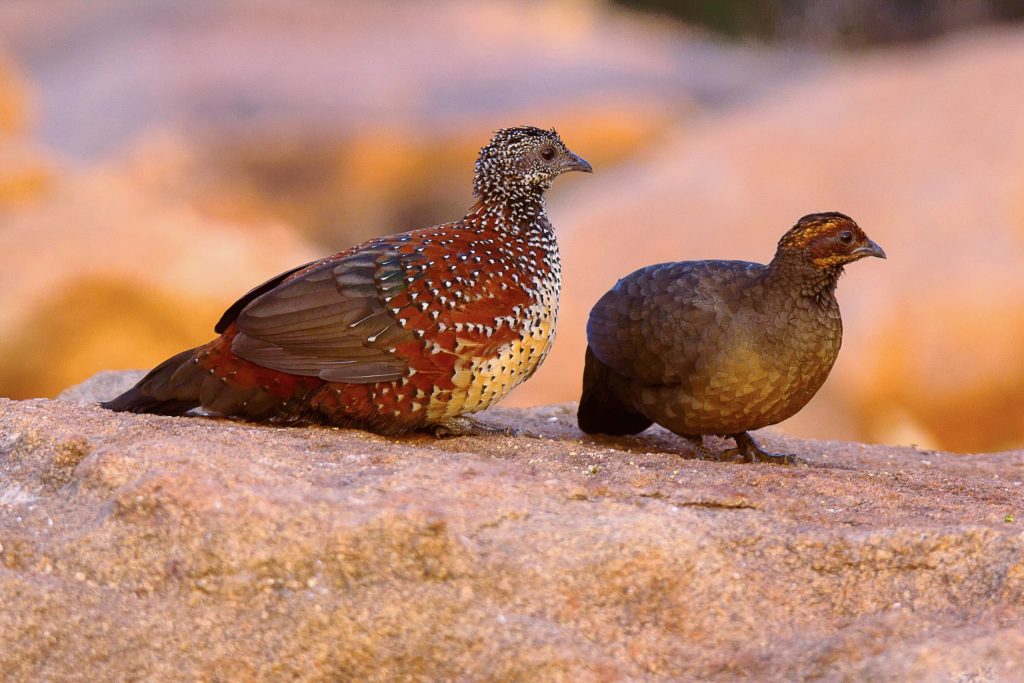
At a glance, this species is a marvel of color and pattern. Males are resplendent: their bodies clad in rich chestnut with bold white spots, wings dark and finely marked, and a gleaming blackish head adorned with a short crest. The name spurfowl comes from the sharp spurs on the male’s legs, weapons used in territorial skirmishes and displays of dominance. Females, though more subdued, retain a quiet elegance with brown plumage scattered with pale markings, perfectly blending into the scrub as they shepherd chicks through cover.
The Painted Spurfowl (Galloperdix lunulata) is endemic to India, found mostly along the rocky slopes, dry deciduous forests, and scrublands of the Western Ghats and Deccan Plateau. Unlike its more famous relatives, such as junglefowl or peafowl, this bird lives close to the ground, foraging quietly among leaf litter. Its diet consists of seeds, berries, insects, and tender shoots, scratched from the earth with vigorous kicks of its strong feet. Quick to vanish at the hint of danger, it prefers running and hiding to taking flight.
Breeding season begins with the onset of the monsoon, when males become especially vocal and territorial. Their calls—loud, repeated chuk-chuk notes—echo across rocky valleys, carrying far in the damp air. Courtship involves strutting, spreading wings, and showing off the gleam of leg spurs. Nests are shallow scrapes on the ground, usually tucked under thick cover or near rocks. The female lays a clutch of 3–5 eggs, incubating them alone while the male patrols nearby. Once hatched, the chicks are precocial, following their mother almost immediately in search of food.
From a conservation perspective, the Painted Spurfowl is classified as a species of Least Concern. It enjoys a relatively wide distribution within peninsular India and shows resilience in adapting to semi-open, scrubby habitats. Still, habitat degradation from quarrying, overgrazing, and deforestation threatens local populations. Because it is a ground-dwelling bird, it is especially vulnerable to disturbance and predation when breeding.
Beyond its ecological role, the Painted Spurfowl carries cultural weight in rural India. Its striking plumage and elusive nature make it a subject of admiration among birdwatchers and naturalists. For local communities, it is often regarded as a symbol of the wild, hardy character of the rocky hills themselves—resilient, vibrant, and rooted in place.
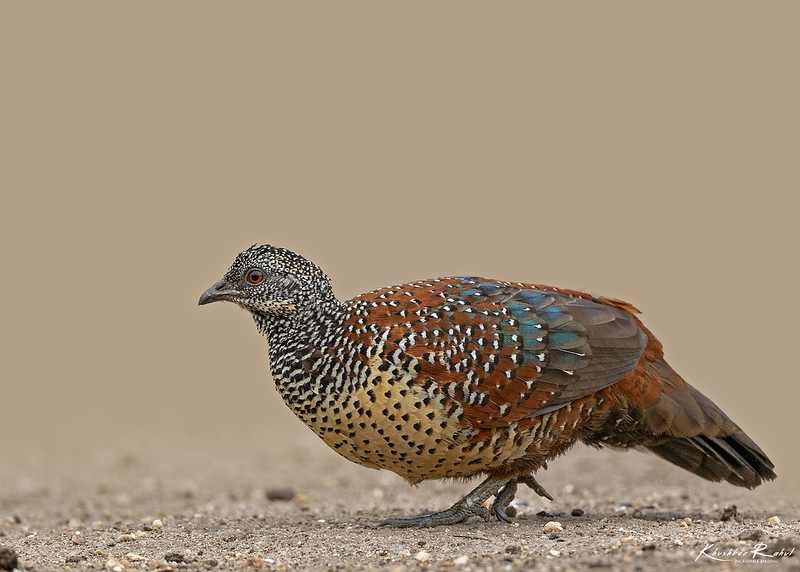
To see a Painted Spurfowl in the wild is to glimpse the hidden beauty of India’s rugged landscapes. The bird embodies the earth’s palette—chestnut, black, ivory, and gold—scattered across feathers like brushstrokes. In its cautious steps and rolling calls, it reminds us that even in the harshest terrain, nature paints her masterpieces with patience and grace.