Ribbons of Light: The Asian Paradise Flycatcher
At dawn in a quiet forest glade, the air shimmers with sudden motion—a slender bird darts between branches, its long tail streaming like ribbons of silk in the wind. A flash of sapphire-black, a ripple of chestnut or pure white, and then it vanishes, leaving only the echo of a sharp tsip-tsip call. This fleeting apparition is the Asian Paradise Flycatcher (Terpsiphone paradisi), one of Asia’s most enchanting songbirds.
A Beauty in Two Forms
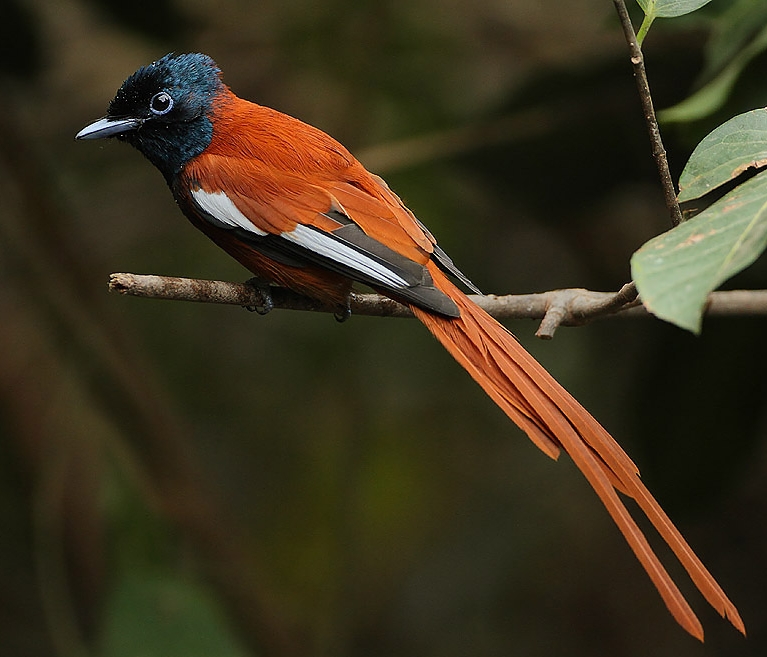
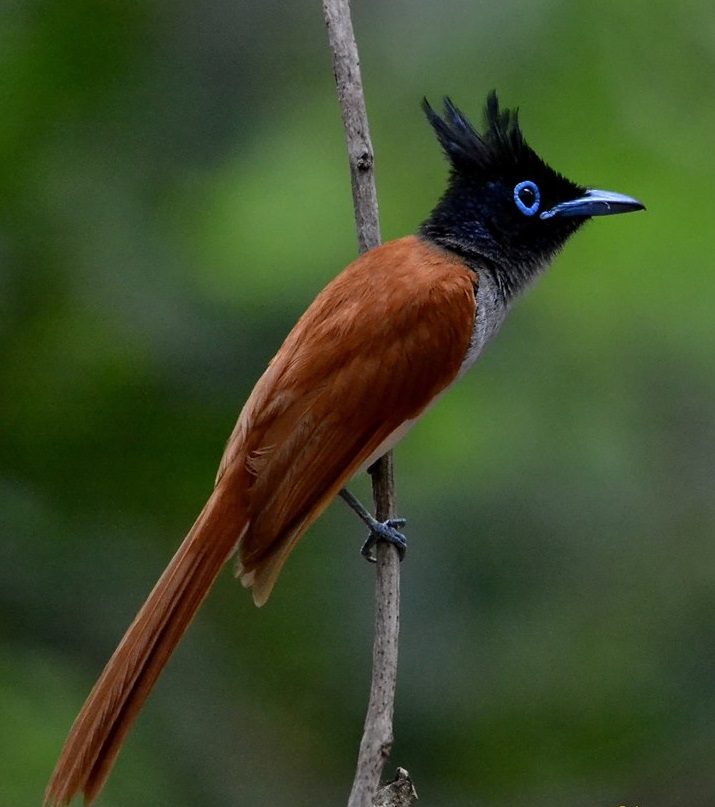
The Asian Paradise Flycatcher is a master of disguise. The males can appear in two striking morphs: some carry a rich chestnut coat with fiery tails, while others wear a dazzling white robe, their feathers glimmering like flowing banners of light. Both forms share the glossy blue-black crested head and brilliant azure eye-rings that sparkle against the forest shade. The females, less flamboyant but equally graceful, wear warm rufous plumage with shorter tails, blending more easily with the canopy. Together, they embody a living contrast of elegance and practicality.
Forest Acrobatics
This bird ranges widely across South and Southeast Asia, from India and Sri Lanka through the Himalayas and into China, Indochina, and Indonesia. Preferring wooded habitats—forests, groves, and even shaded gardens—it is a restless hunter of insects. With quick, darting flights, it snatches flies, moths, and beetles mid-air, its long tail streaming like a comet’s trail. Its call, a sharp chee-ree, chee-ree, often betrays its presence before the eye catches the streak of light weaving through the branches.
Love in the Trees
When breeding season arrives, the male becomes a performer. He flutters and fans his elongated tail feathers, sometimes perching near the nest to display his finery, as if reminding the female of his strength and allure. The female, however, takes the lead in raising the next generation. She builds a delicate cup-shaped nest of bark and fibers, bound with spider silk, often suspended from a forked branch. Both parents share the task of feeding the chicks, their constant flights a ballet of dedication between the canopy and the nest.
The Asian Paradise Flycatcher has long captivated poets and bird lovers. Its flowing tail feathers inspired local folklore, often likened to ribbons of heaven or messengers of good fortune. In some cultures, a fleeting glimpse of its white morph was considered an auspicious sign, a promise of blessings and harmony.
A Symbol of Grace
Challenges and Conservation
Fortunately, this species is listed as of Least Concern on the IUCN Red List, thanks to its wide distribution. Yet, it is not immune to the pressures of deforestation, pesticide use, and urban encroachment, which steadily chip away at its forest home. Protecting large, continuous stretches of woodland ensures not only the survival of this bird but also the countless other creatures that share its canopy stage.
A Closing Reflection
To watch an Asian Paradise Flycatcher in flight is to see poetry made flesh. Its ribbon-like tail turns the forest into a theater, each dart and glide a verse in motion. In a world increasingly stripped of wonder, this bird reminds us that beauty often comes swiftly, fleetingly, like a ribbon of light across the trees—there for those willing to pause and marvel.