The Fire of the Rainforest: The Scarlet Macaw
The rainforest is never silent. Amid the steady hum of insects and the drip of water from emerald leaves, a piercing screech splits the air. Suddenly, a streak of red, yellow, and blue arcs across the canopy like a living flame. This is the Scarlet Macaw (Ara macao), one of the most iconic and breathtaking parrots of the Americas.
A Masterpiece in Feathers
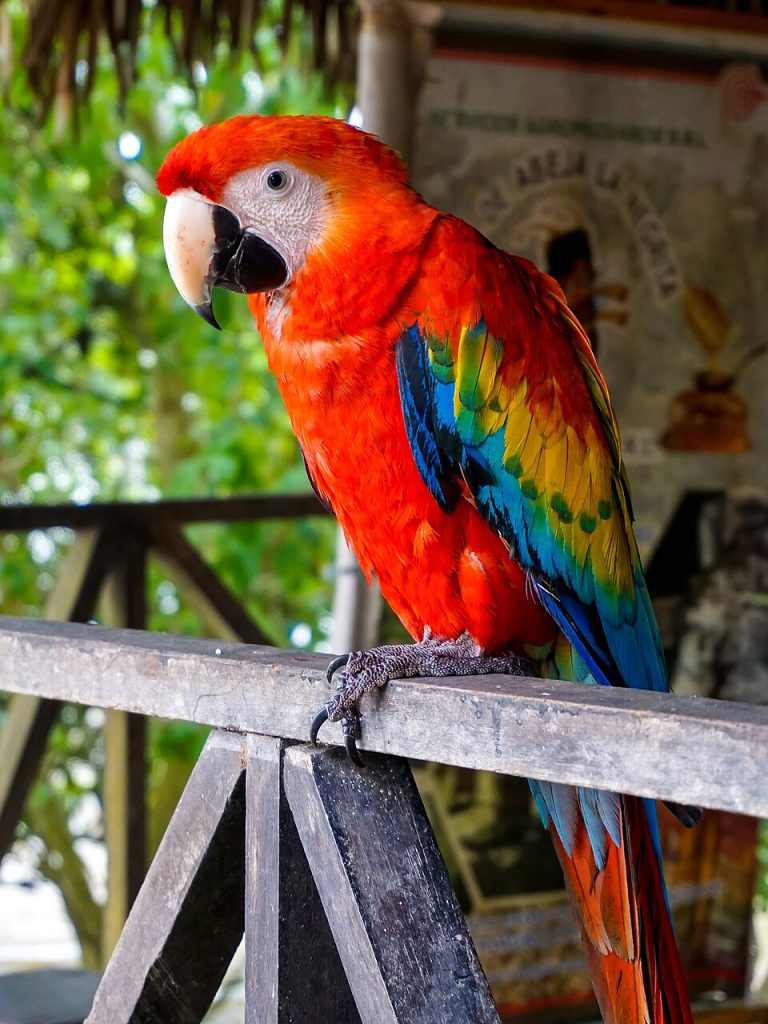
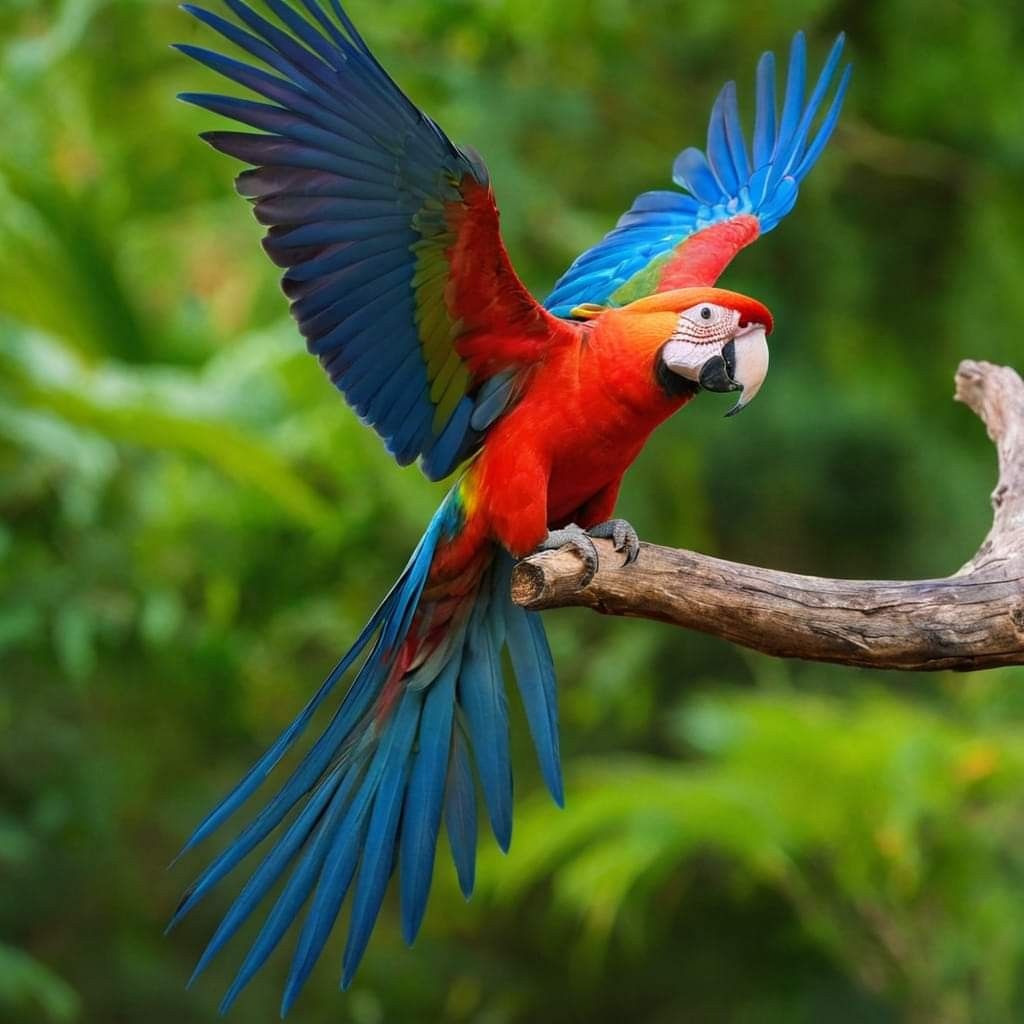
The Scarlet Macaw is a canvas of pure color. Its body glows in scarlet red, wings flash sunlit yellow, and flight feathers blaze in brilliant cobalt blue. The face is bare and white, etched with fine lines of tiny feathers, while the powerful hooked beak—pale above and black below—is perfectly built for cracking nuts and seeds. Unlike many birds, there is little difference between males and females; both share the same flamboyant attire, a statement that in their world, beauty belongs to all.
Heart of the Tropics
These parrots are native to the tropical rainforests of Central and South America, stretching from Mexico down through the Amazon basin. They thrive in tall, old-growth forests, where they nest in hollow trees and forage high among the branches. Their diet consists mainly of seeds, fruits, nuts, and even clay from riverbanks, which neutralizes toxins in their food. In flight, they are unmistakable: powerful wingbeats carry them in noisy flocks, their harsh raaak-raaak calls echoing across the jungle like a rallying cry of the wild.
Bonds That Last a Lifetime
One of the Scarlet Macaw’s most remarkable traits is its lifelong pair bonds. Mated pairs are almost always seen together—flying side by side, grooming each other’s feathers, or feeding together in perfect harmony. During nesting season, they choose cavities high in ancient trees, where the female lays two to four eggs. Both parents take turns guarding and feeding the chicks, their dedication a vivid display of loyalty and cooperation in the heart of the rainforest.
A Bird of Spirit and Story
For Indigenous peoples across the Americas, the Scarlet Macaw has long been a symbol of the sun, fire, and vitality. Its feathers were used in ceremonial headdresses, and its brilliance celebrated in myths as a messenger between the earthly and the divine. Even today, it remains an ambassador of the rainforest—its beauty reminding us of the vibrancy and fragility of tropical ecosystems.
Fragile Flame
Though still relatively widespread, the Scarlet Macaw faces serious threats. Deforestation, illegal pet trade, and hunting have reduced populations in many areas, and in some parts of its range, it has disappeared entirely. Conservation projects across Central America are now working to reintroduce these birds, protect nesting sites, and educate communities. The Scarlet Macaw is listed as of Least Concern globally, but its future depends on safeguarding the forests it calls home.
A Final Reflection
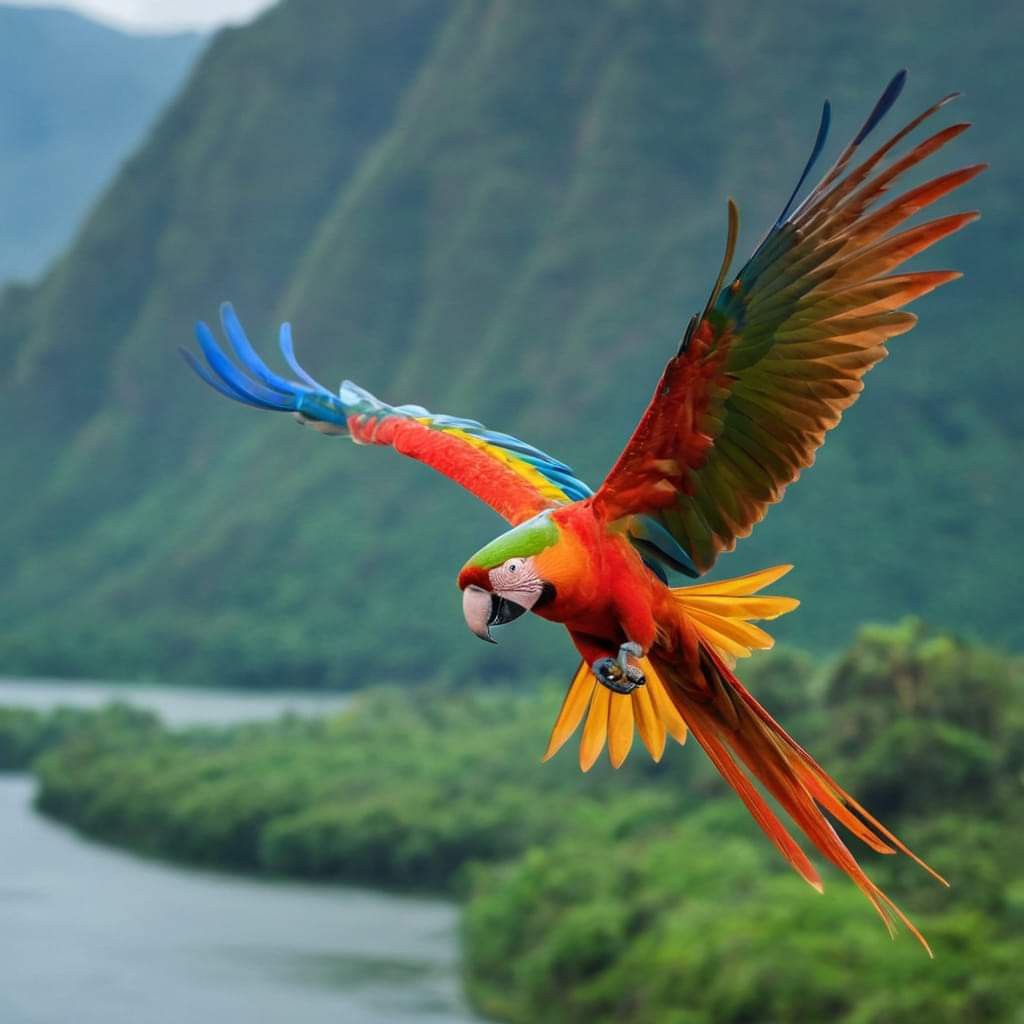
To see a Scarlet Macaw in flight is to watch a flame ignite the sky—brilliant, untamed, unforgettable. It is not merely a bird but a reminder that the rainforest itself is alive with color, song, and resilience. As long as the Scarlet Macaw’s wings burn across the treetops, there remains hope that we, too, can keep the fire of the wild burning bright.