The Emerald Spirit of the Cloud Forest: The Resplendent Quetzal
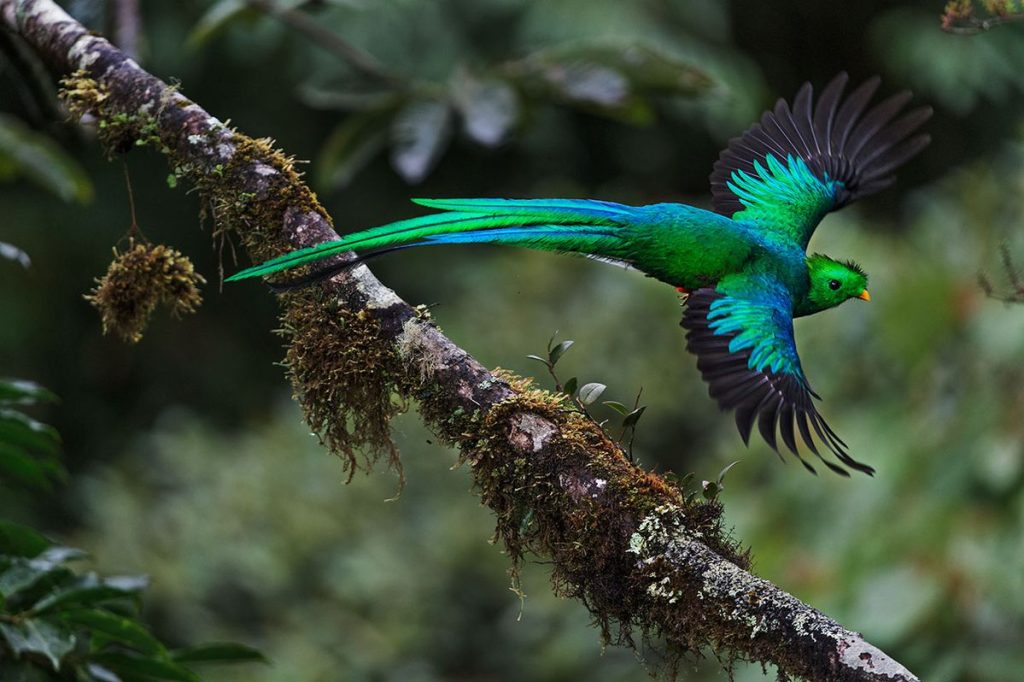
In the cool mists of a Central American cloud forest, a flash of emerald green and crimson red drifts between moss-draped trees. The bird pauses, its long, iridescent tail feathers trailing like streams of light through the canopy. A soft call echoes—wac-wac—and for a moment, the forest feels enchanted. This is the Resplendent Quetzal (Pharomachrus mocinno), a bird that has inspired gods, kings, and dreamers for centuries.
A Jewel in Feathers
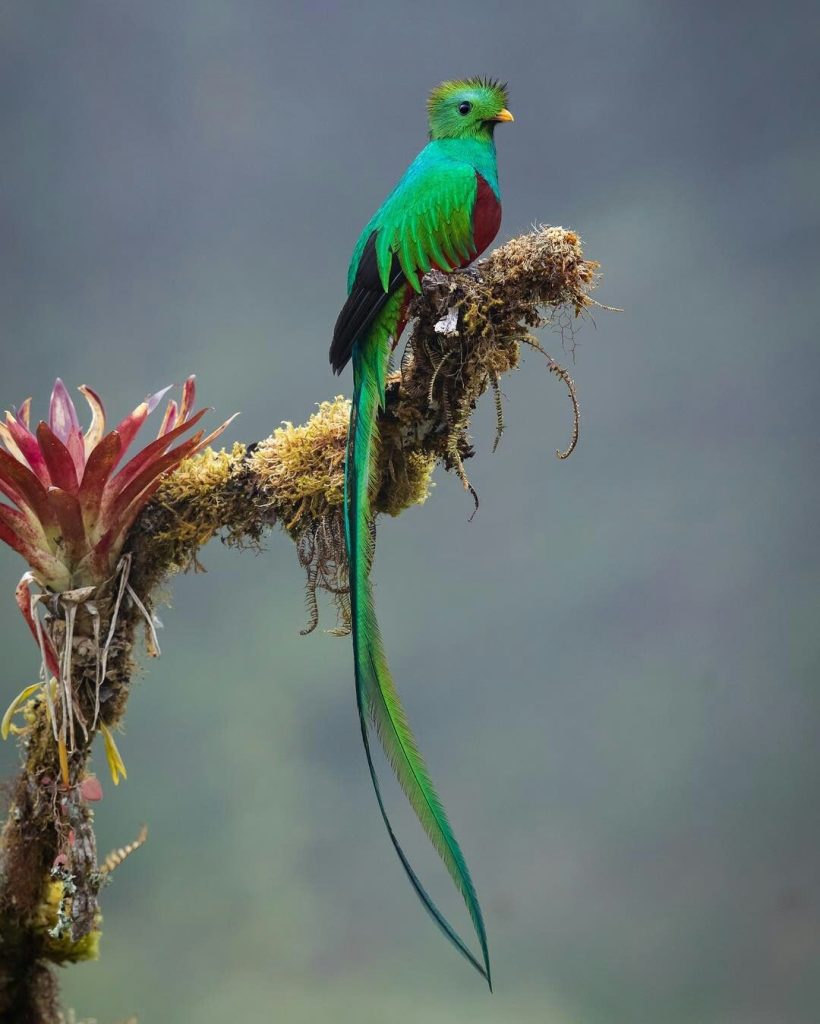
The male Resplendent Quetzal is a living jewel. His plumage glows in shifting shades of emerald, turquoise, and gold, with a bright crimson breast and long upper tail coverts that extend far beyond his body, flowing like green ribbons in flight. His head bears a delicate feathery crest, giving him an almost regal appearance. The female, though less flamboyant, wears her own soft greens and browns, blending seamlessly with the canopy—a reminder of her role as guardian of the nest.
Life Among the Clouds
Quetzals inhabit the cloud forests of Central America, particularly in Guatemala, Costa Rica, Honduras, and southern Mexico. These cool, moist, high-altitude forests provide fruiting trees that sustain them, especially wild avocados, which they swallow whole before regurgitating the seeds, helping the forest renew itself. They also feed on insects, small frogs, and lizards, weaving effortlessly between branches in search of food.
Rituals of Love and Nesting
When mating season arrives, males become performers of breathtaking elegance. They chase each other in aerial displays, their shimmering tails streaming behind them like banners of light. To attract females, they perch and call softly, showing off their colors in dappled sunlight. Once paired, both parents carve a nest into decayed trees, taking turns incubating eggs and feeding the chicks. Despite their beauty, quetzals are shy, often remaining hidden among dense foliage, a treasure glimpsed only by the patient observer.
A Sacred Symbol
Few birds carry such profound cultural weight. To the ancient Maya and Aztec civilizations, the quetzal was sacred, symbolizing freedom, fertility, and the divine. Its brilliant green tail feathers were treasured as more valuable than gold, worn only by kings and priests. In Guatemala, the quetzal remains a national symbol today, gracing the flag and lending its name to the national currency. Even now, it embodies the spirit of liberty—legend says a quetzal cannot live in captivity, for its soul belongs to the sky.
Threats to the Radiant One
Despite its cultural importance, the Resplendent Quetzal faces modern dangers. Deforestation, climate change, and habitat fragmentation threaten the cloud forests they depend upon. While not yet critically endangered, their populations are shrinking, and sightings in some regions have grown rare. Conservation efforts focus on protecting highland forests and building eco-tourism initiatives that value living quetzals more than feathers or forests cleared for farmland.
A Final Reflection
To see a Resplendent Quetzal is to witness nature’s imagination at its peak—a bird so radiant it seems born of dreams rather than earth. It carries centuries of myth on its wings and the future of fragile forests in its flight. In its emerald glow, we are reminded that beauty is both gift and responsibility, urging us to guard the wonders still alive in our world.