10 Birds That Lay Eggs in Other Birds’ Nests: Understanding Brood Parasitism in Avian Species
Most birds build their own nests and care for their young, but some species take a completely different approach to raising their offspring. These birds lay their eggs in other birds’ nests and let the host parents do all the work of incubating eggs and feeding chicks. This behavior is called brood parasitism and allows certain species to skip the hard work of nest building and parenting.
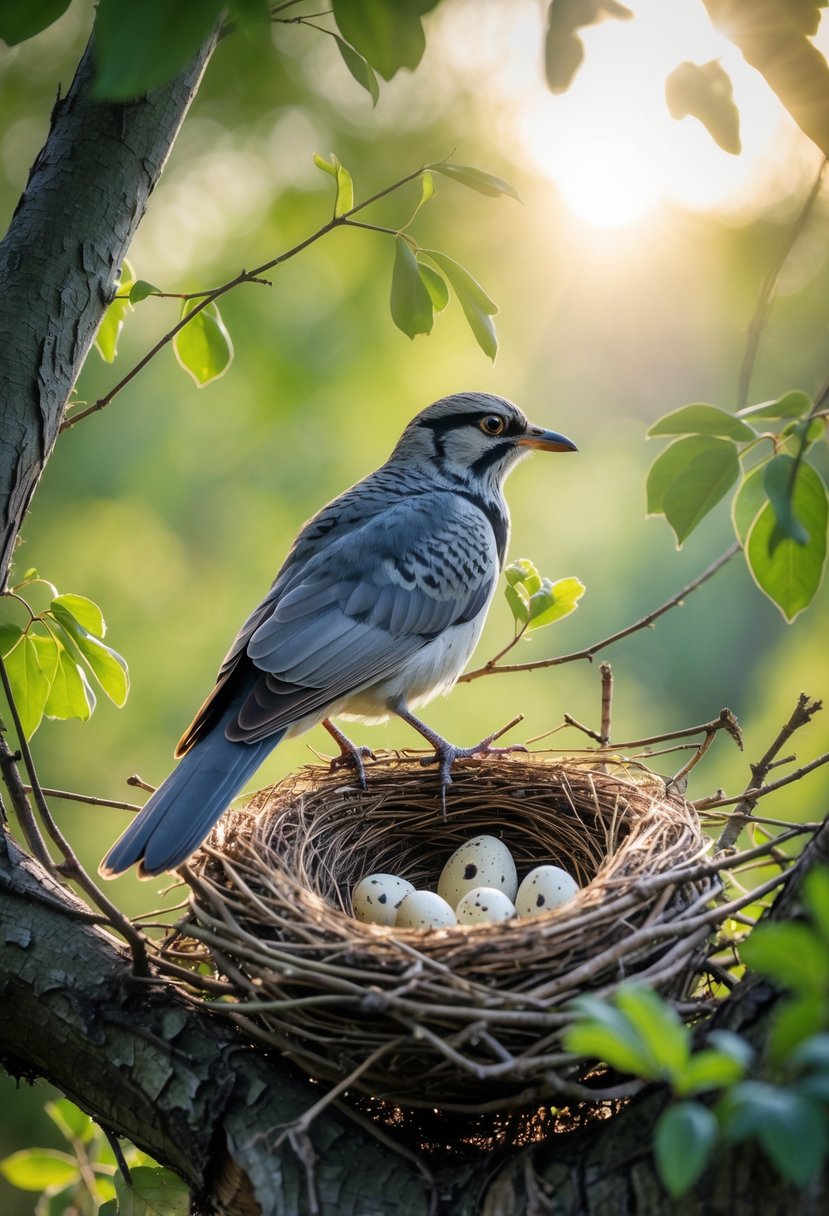
This reproductive strategy exists in birds around the world, from common cowbirds in North America to various cuckoo species across different continents. Understanding how these parasitic birds select host nests and the effects on their unwitting foster parents reveals fascinating details about survival and adaptation in nature.
1) Brown-Headed Cowbird
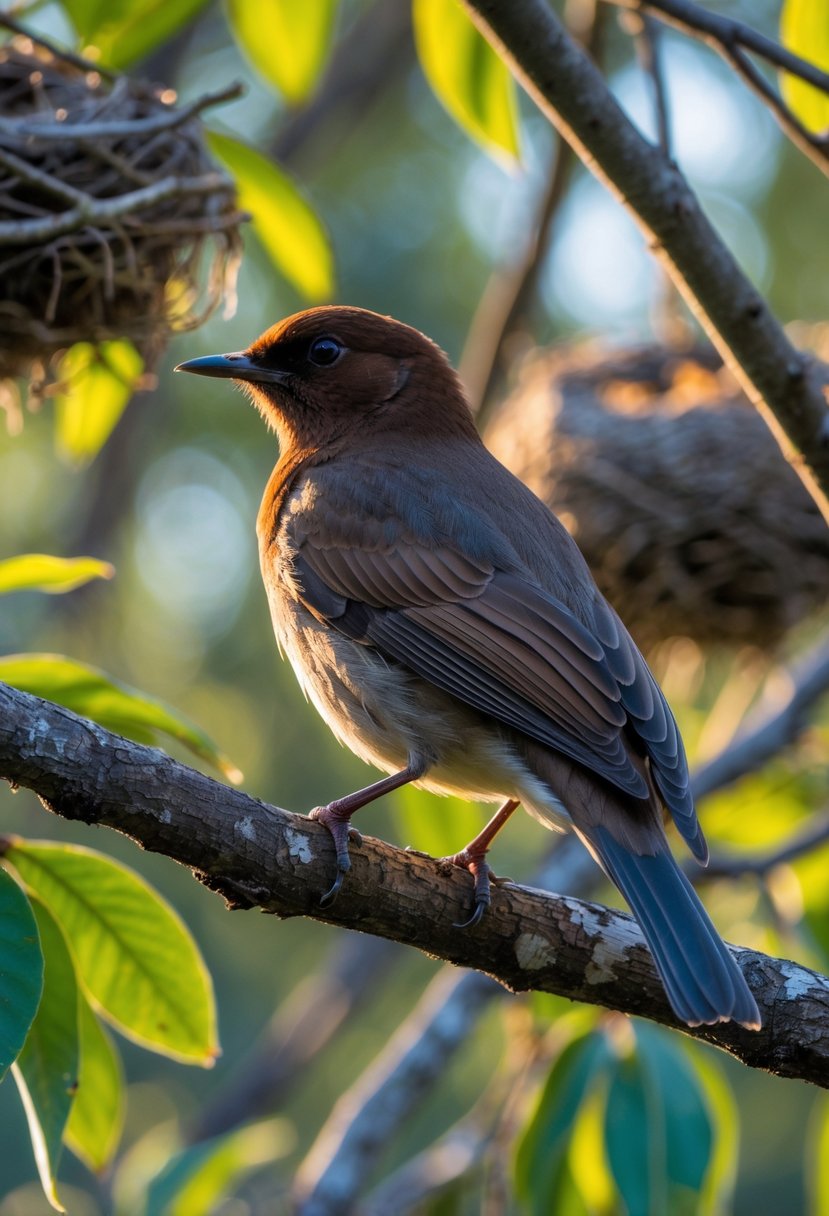
The Brown-headed Cowbird is North America’s most well-known brood parasite. These stocky blackbirds never build their own nests.
Female cowbirds lay their eggs in other birds’ nests instead. The host birds then raise the cowbird chicks as their own.
A single female can produce over three dozen eggs each summer. She places these eggs in different nests of other bird species.
Brown-headed Cowbirds parasitize over 220 different bird species across North America. They target birds like yellow warblers, blackbirds, and grassland sparrows.
This breeding strategy often harms the host birds’ own chicks. Many host species cannot tell the difference between their eggs and cowbird eggs.
Historically, these birds followed bison herds across the Great Plains. Today they follow cattle and live throughout North America.
Their widespread parasitism has contributed to population declines in some songbird species. Some host species have even reached endangered status due to heavy cowbird parasitism.
2) Common Cuckoo
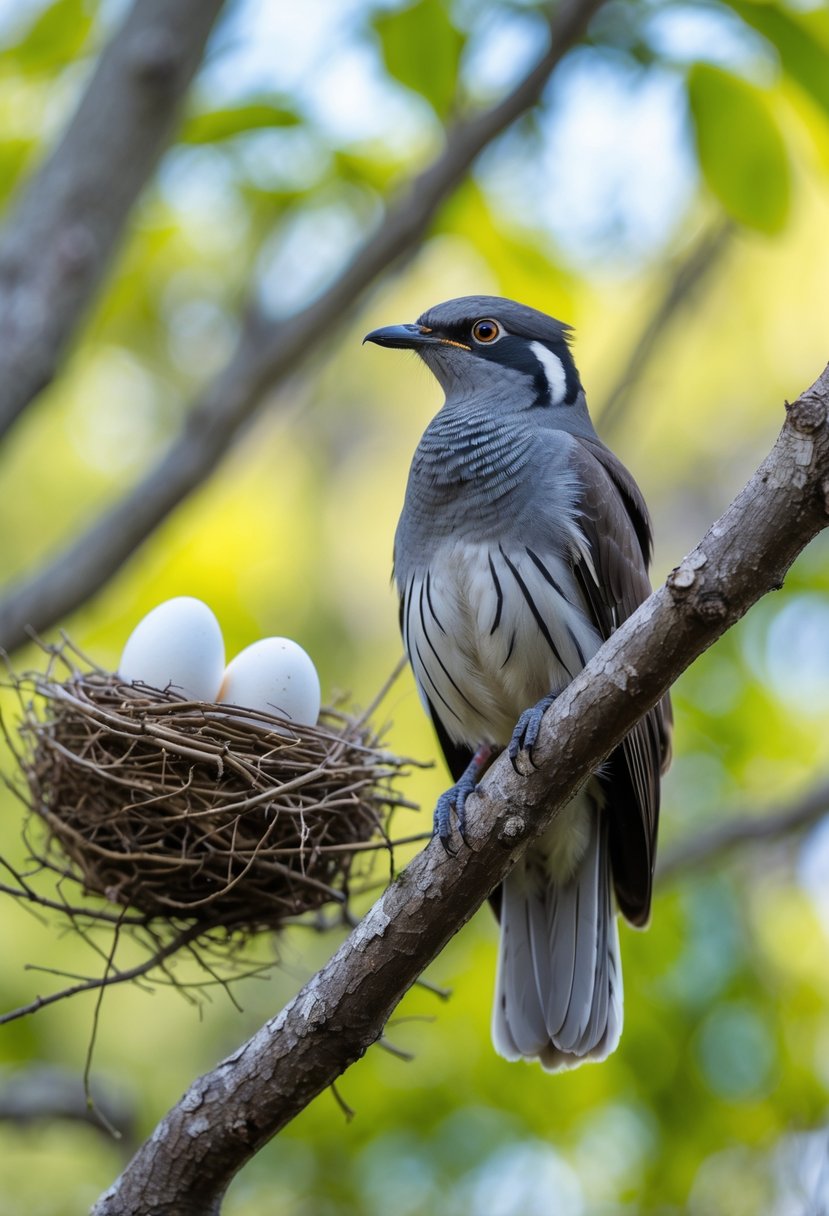
The common cuckoo is a master of deception that practices brood parasitism. This bird lays its eggs in other birds’ nests and lets the host parents do all the work.
Common cuckoos are widespread summer migrants to Europe and Asia. They spend winters in Africa before returning to breed.
The female cuckoo watches other birds build their nests. She waits for the right moment to sneak in and lay her egg.
Cuckoos have remarkable egg mimicry abilities. Their eggs closely match the size, color, and patterns of their host’s eggs.
This sneaky strategy helps cuckoos avoid the hard work of raising chicks. The host birds feed and care for the cuckoo babies as if they were their own.
Dunnocks are common host birds for cuckoos. However, cuckoos will use many different bird species as hosts for their eggs.
The cuckoo chick often grows larger than its foster siblings. It may even push other eggs or chicks out of the nest.
3) Indigobird

The indigobird belongs to the Viduidae family of songbirds. These cunning birds that lay eggs in other species’ nests are native to Africa.
Indigobirds use a different method than other brood parasites. They do not destroy the host bird’s eggs like some other species do.
Instead, indigobirds simply mix their eggs in with their hosts. This allows the host’s own eggs to survive alongside the parasite eggs.
The female indigobird finds a suitable nest from another bird species. She then places her egg among the existing eggs in the nest.
The host parents cannot tell the difference between their own eggs and the indigobird’s egg. They care for all the eggs equally until they hatch.
This strategy works well for indigobirds because it does not make the host birds suspicious. The host continues normal nesting behavior without knowing about the extra egg.
4) Honeyguide
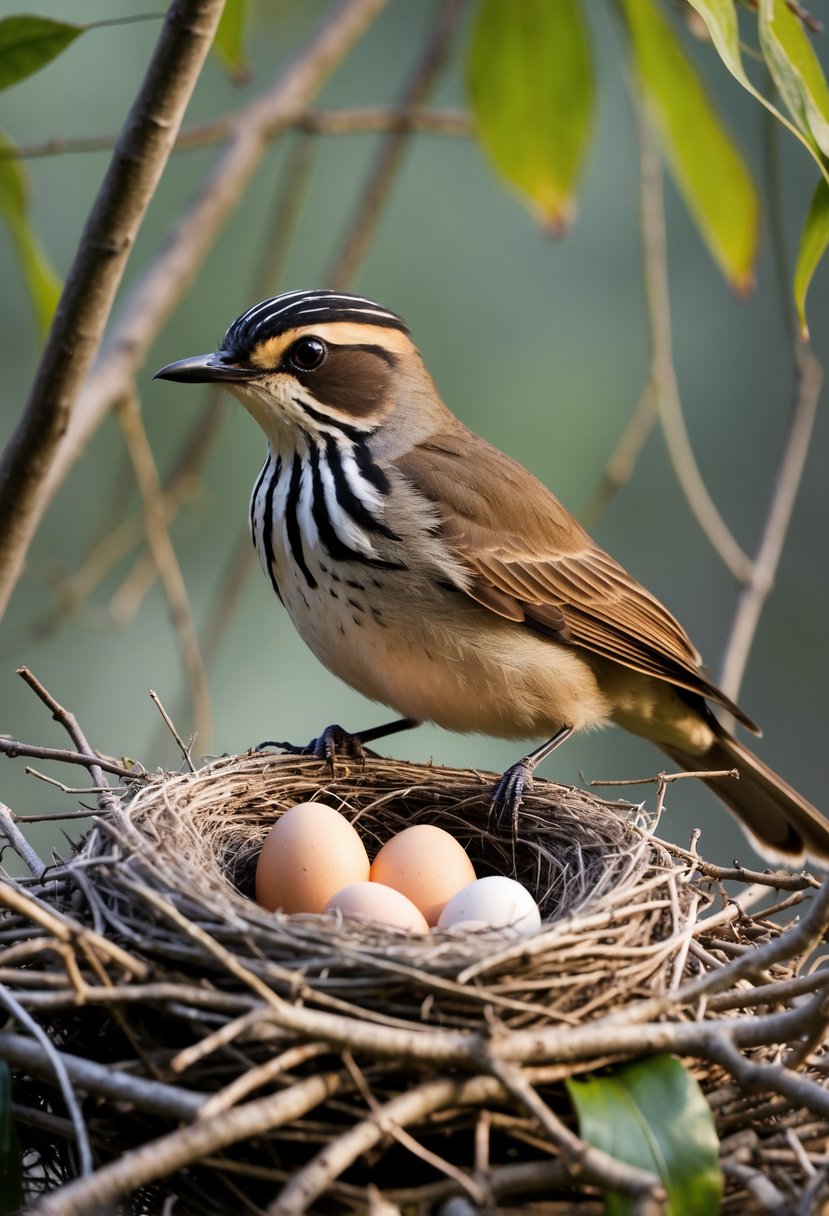
The honeyguide is a small wild bird that practices brood parasitism. These birds lay their eggs in other birds’ nests just like other parasitic species.
Female honeyguides target various host birds for their eggs. They lay eggs in the nests of white-eyes, warblers, and starlings.
Honeyguides use a smart strategy to improve their chances. They spread eggs across multiple nests to reduce risk.
Baby honeyguides show violent behavior right after hatching. They use their sharp beaks to kill nest-mates immediately after they hatch.
The African honeyguide has a special relationship with humans. These skilled brood parasites are famous for leading humans to beehives so both species can share the honey.
Unlike cuckoos, honeyguides show different egg patterns. Scientists have found that honeyguides destroy their own species’ eggs to eliminate competition.
5) Shiny Cowbird
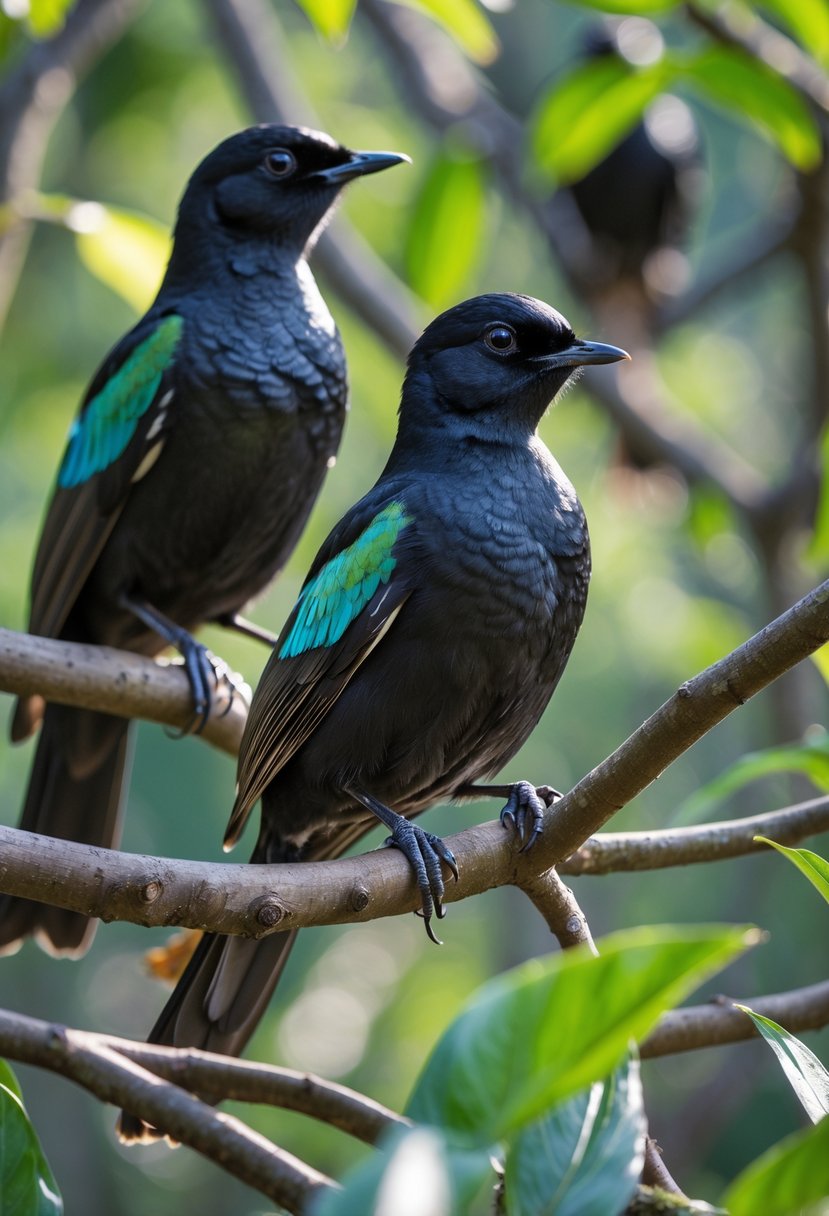
The Shiny Cowbird is a brood parasite native to South America and the Caribbean. Male birds have glossy black feathers, while females appear brownish in color.
Shiny Cowbirds are obligate brood parasites. This means they have completely lost the ability to build their own nests or incubate their eggs.
The female cowbird lays its eggs in the nests of other bird species. She relies entirely on host parents to raise her young chicks.
Different bird species react in various ways to this parasitism. Some birds accept the cowbird eggs and raise the chicks as their own. Others reject the foreign eggs from their nests.
In the 20th century, Shiny Cowbirds expanded their range into the Caribbean and reached southern Florida in the mid-1980s. They continue to spread to new areas.
The male’s song plays an important role in attracting mates during breeding season. Their calls are a key part of courtship behavior.
6) Great Spotted Cuckoo
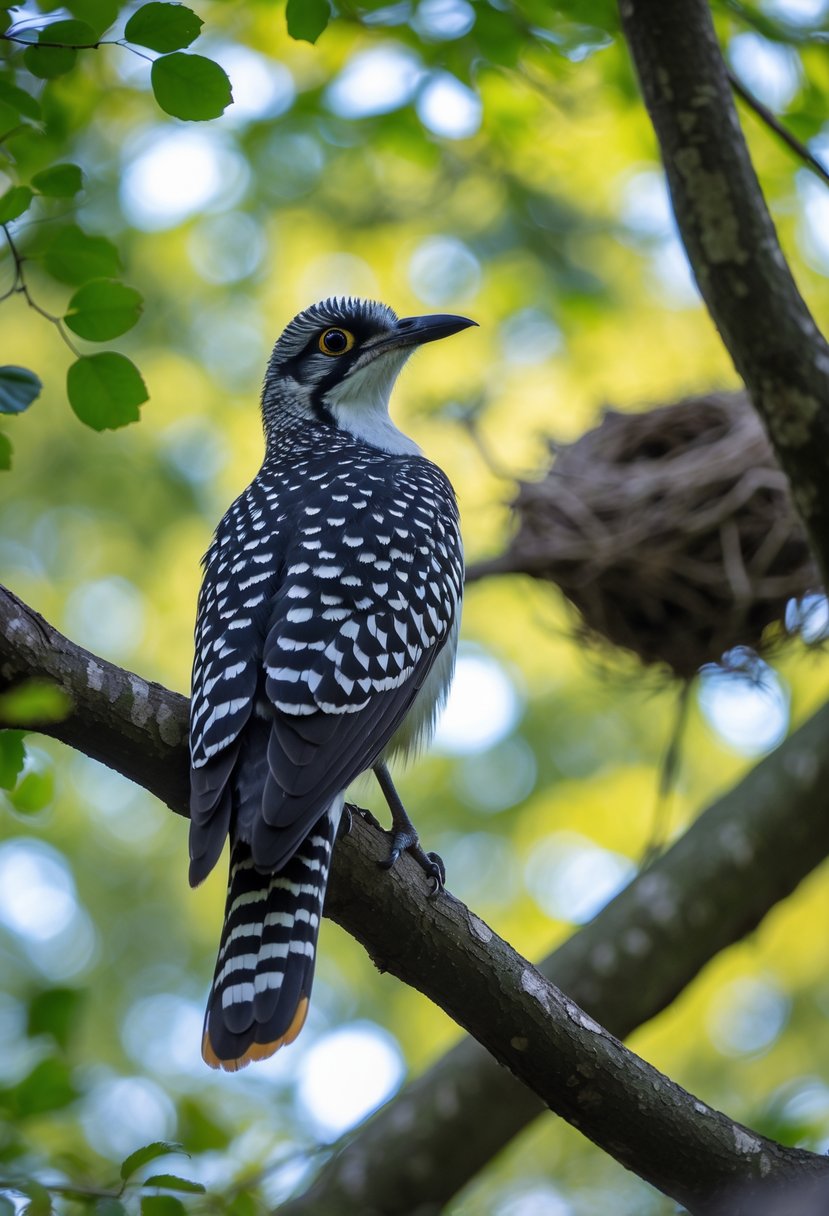
The Great Spotted Cuckoo is a brood parasite that lays its eggs in the nests of corvids, especially magpies. This bird lives across Africa and the Mediterranean Basin.
Unlike other cuckoos, Great Spotted Cuckoos don’t sneak around. Researchers found that they lay their eggs in magpie nests while the magpie is sitting on the nest.
The Great Spotted Cuckoo targets corvids such as magpies, crows, and ravens for their host nests. They choose these birds because they are good at raising young.
Their eggs hatch faster than the host bird’s eggs. The young cuckoos often push out the host’s eggs or chicks from the nest.
This species has adapted well to this lifestyle. They don’t build their own nests or care for their young. Instead, they let other birds do all the hard work of raising their chicks.
7) Asian Koel

The Asian koel is a large cuckoo that practices brood parasitism. These birds don’t build their own nests. Instead, they lay eggs in other birds’ nests.
Asian koels primarily target crow nests for egg laying. They also use the nests of mynas and other host birds. This strategy helps control crow populations naturally.
Male koels are glossy black with green bills and red eyes. Females are brown with white spots and streaks. Both sexes are secretive and stay hidden in dense trees.
The female koel lays only one egg at a time in each host nest. The koel’s eggs have evolved to look like the host bird’s eggs in color and texture. This helps trick the host parents.
Asian koels are skilled at finding host nests quickly, even in new locations. The host birds raise the koel chicks as their own. This saves the koel parents from spending energy on childcare.
8) African Cuckoo
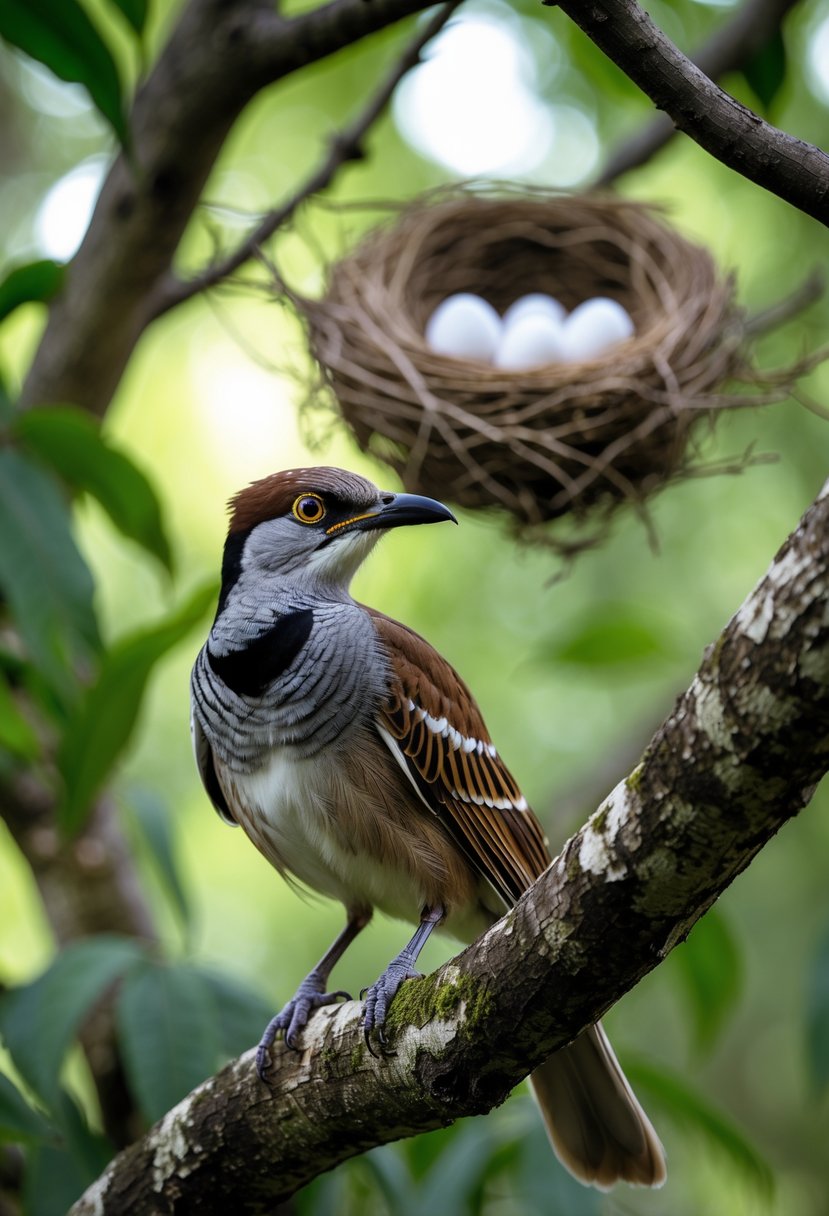
The African Cuckoo is a master of brood parasitism. This bird lays its eggs in other species’ nests and never raises its own young.
This cuckoo targets specific host birds like yellow-billed shrikes and fork-tailed drongos. The African Cuckoo often removes an existing egg before placing its own in the nest.
The bird tries to match its egg patterns to the host’s eggs. However, African cuckoos might lay a black-speckled egg in a nest full of brown polka-dotted eggs.
This strategy helps the African Cuckoo avoid the hard work of parenting. The host birds do all the feeding and care while the cuckoo focuses on reproduction.
Young African Cuckoos often grow larger than their foster siblings. They may push other eggs or chicks out of the nest to get more food and attention from the host parents.
9) Pin-tailed Whydah
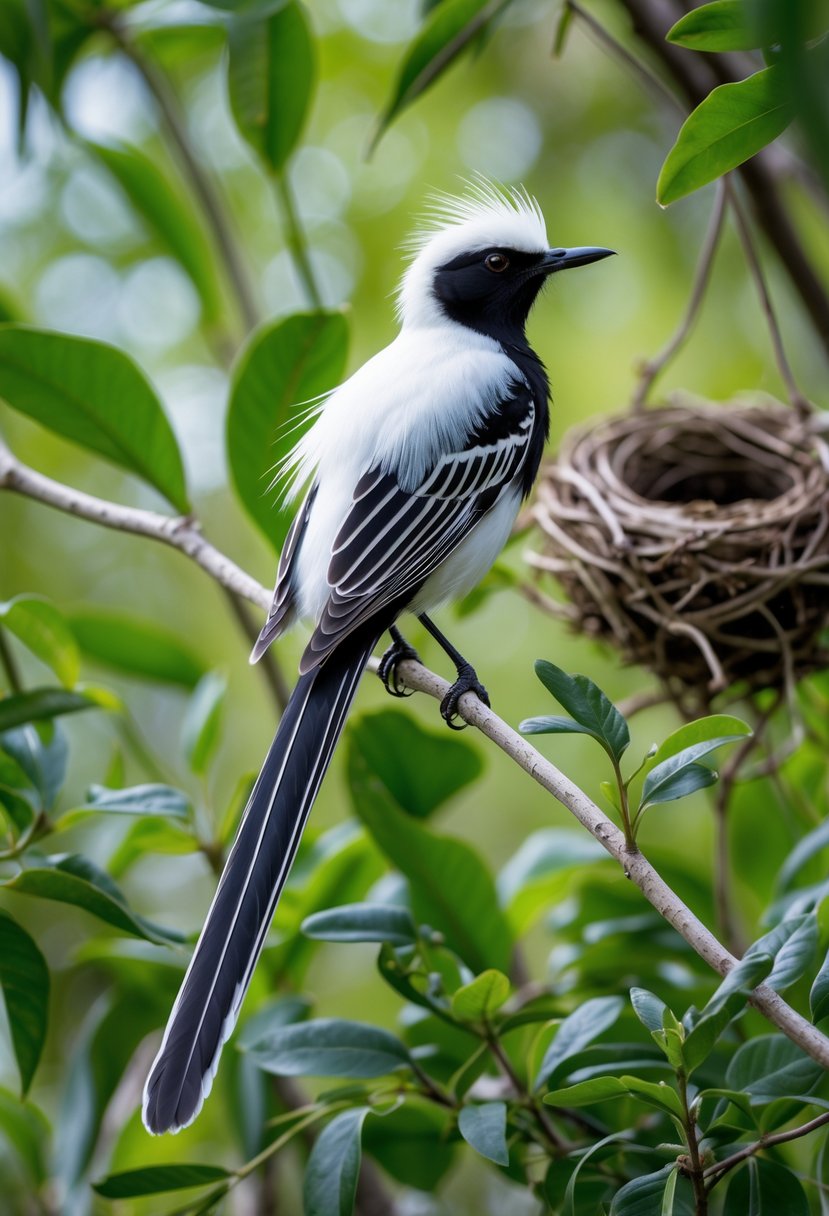
The Pin-tailed Whydah is a small songbird from sub-Saharan Africa. Males grow extraordinarily long tail feathers during breeding season.
These birds are brood parasites that lay their eggs in other birds’ nests. They do not build their own nests.
Female Pin-tailed Whydahs target finches and waxbills for their host nests. They pick birds from the Estrildidae family most often.
Unlike some parasites, Pin-tailed Whydahs do not destroy the host’s eggs. They simply add their own eggs to the existing nest.
A female can lay 1 to 4 eggs at a time in each host nest. She may lay up to 25 eggs total during one breeding season.
The breeding season runs from April through November. Males defend small territories and sing from high perches to attract females.
Host birds raise the whydah chicks as their own. This saves energy for the parent whydahs.
10) Dusky Cuckoo
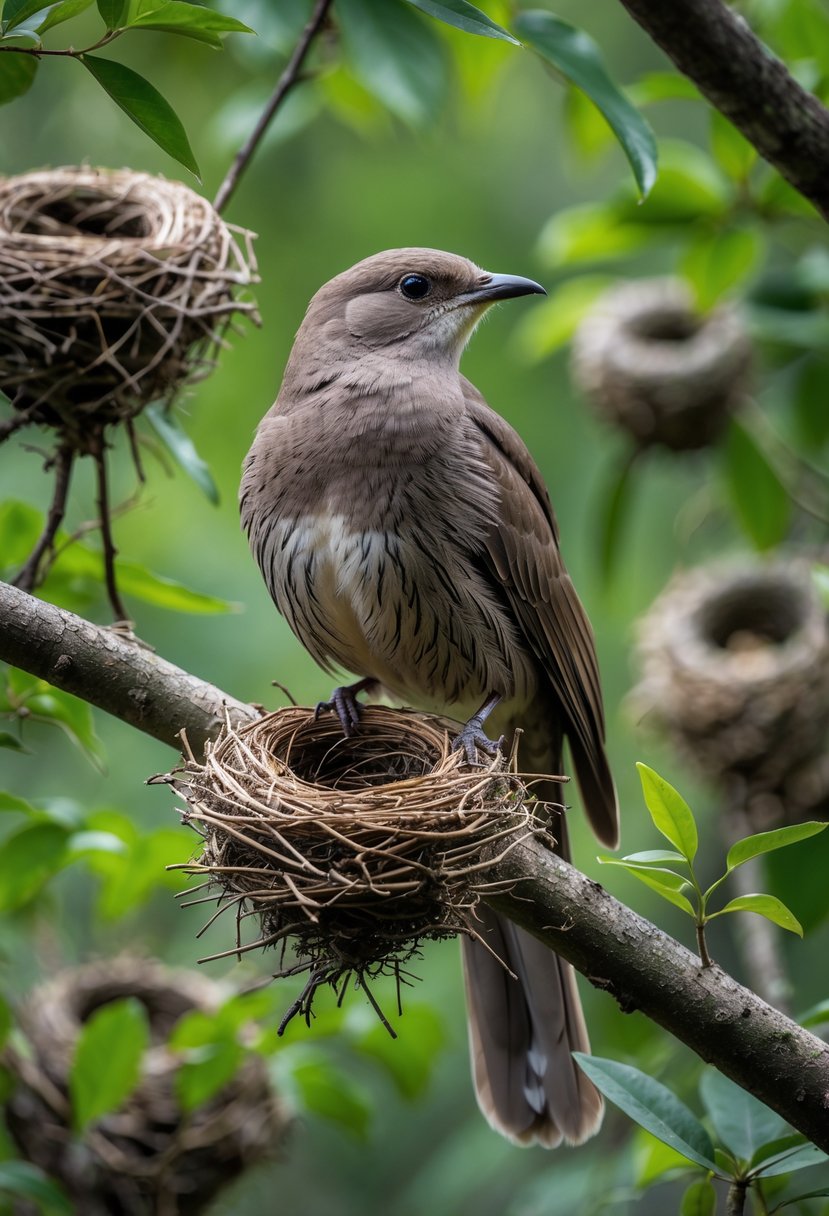
The Dusky Cuckoo practices brood parasitism like other cuckoo species. This bird lays its eggs in the nests of other birds instead of building its own nest.
Female Dusky Cuckoos watch host birds carefully. They wait for the right moment to sneak into another bird’s nest when the parents are away.
The Dusky Cuckoo targets smaller songbirds as hosts. These birds become unwitting parents to cuckoo chicks they did not produce.
Like other cuckoos that trick other birds into raising their young, the Dusky Cuckoo benefits from this strategy. The host parents do all the hard work of feeding and caring for the cuckoo chick.
Dusky Cuckoo eggs often hatch faster than the host bird’s eggs. The young cuckoo may push out the other eggs or chicks from the nest.
This behavior allows Dusky Cuckoos to save energy. They don’t spend time building nests or raising their own young.
The host birds usually accept the cuckoo chick as their own. They feed it until it becomes large enough to leave the nest.
Understanding Brood Parasitism
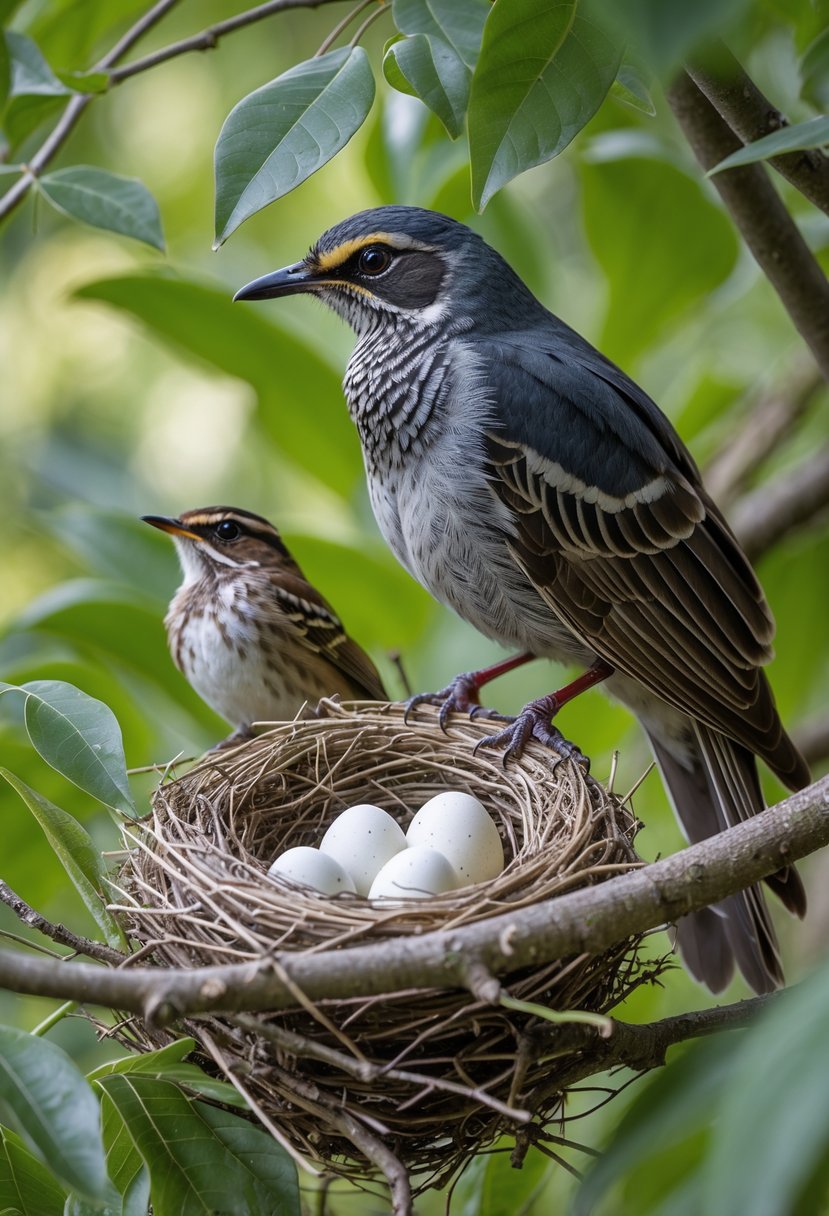
Brood parasitism is a reproductive strategy where certain bird species lay their eggs in other birds’ nests instead of raising their own young. This behavior allows parasitic birds to save energy while forcing host birds to do all the work of raising their chicks.
How Brood Parasitism Works
The process begins when a female parasitic bird finds a suitable host nest. She waits for the right moment when the host parents are away from their nest.
The parasitic bird quickly lays one or more eggs in the host nest. This usually takes just a few seconds to avoid detection by the host parents.
Many parasitic birds have evolved eggs that look similar to their host’s eggs. This mimicry helps fool the host parents into thinking the parasitic egg belongs to them.
When the parasitic chick hatches, it often does so before the host’s own eggs. The young parasite may push the host’s eggs or chicks out of the nest to eliminate competition.
The host parents feed and care for the parasitic chick as if it were their own. They cannot tell the difference and continue to provide food until the young bird can survive on its own.
Evolutionary Advantages
Brood parasitism offers significant energy savings for the parasitic species. They avoid the costly tasks of nest building, egg incubation, and chick rearing.
This reproductive strategy allows parasites to maximize their reproductive success while minimizing parental investment. Female parasitic birds can lay more eggs throughout the breeding season since they don’t spend time caring for young.
The strategy also reduces predation risk for adult parasitic birds. They spend less time at nests where they might be vulnerable to predators or other dangers.
Over 100 bird species worldwide use this strategy. The behavior has evolved at least seven separate times in bird evolution, showing its effectiveness as a survival strategy.
Parasitic birds can also take advantage of host species that are better at finding food or protecting nests in specific environments.
Impact on Host Species
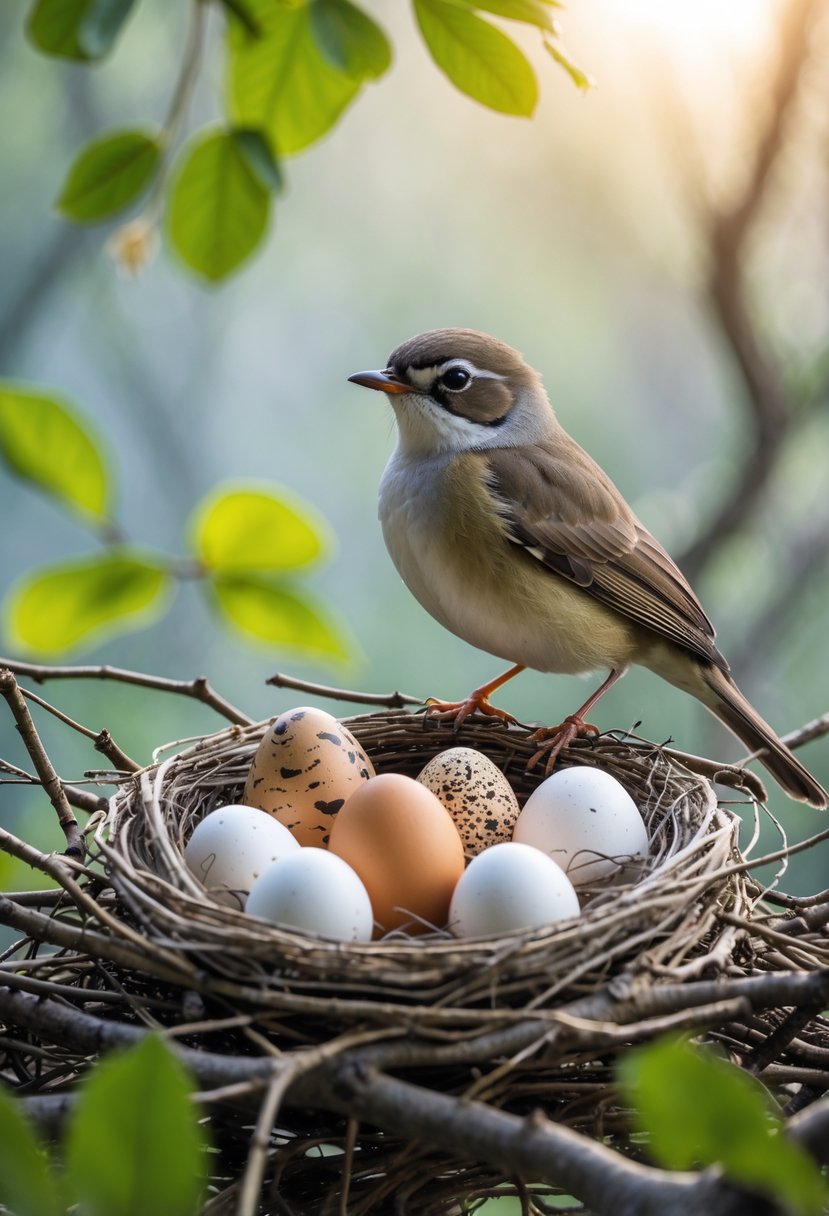
Brood parasitism can contribute to declines in host bird populations, especially when host species are already vulnerable. Host birds develop various defense strategies to protect their nests from parasitic eggs.
Effects on Reproductive Success
Host birds face significant challenges when parasitic eggs appear in their nests. The parasitic chicks often hatch earlier than host eggs and grow faster.
Cowbird chicks can reduce host reproductive success by 30-60%. They compete directly with host chicks for food and parental attention.
Cuckoo chicks create even more damage. Young cuckoos push host eggs and chicks out of the nest within hours of hatching. This behavior kills all of the host’s own offspring.
Some host species lose entire broods to parasitic birds. Reed warblers that raise cuckoo chicks produce zero offspring of their own that season.
The energy cost hits hosts hard. Parent birds must work twice as hard to feed the larger parasitic chicks. This extra effort can weaken adult birds and reduce their future breeding success.
Behavioral Adaptations of Hosts
Host species have developed several defense strategies against brood parasites like cuckoos and cowbirds.
Egg rejection is the most common defense. Host birds learn to recognize foreign eggs and remove them from their nests. American robins reject 95% of cowbird eggs.
Nest abandonment occurs when hosts discover parasitic eggs. Birds will abandon their entire clutch rather than raise parasitic young.
Aggressive nest defense helps some species. Yellow warblers and red-winged blackbirds attack approaching cowbirds during egg-laying season.
Nest concealment reduces parasitism rates. Birds that build hidden or covered nests face fewer parasitic attacks than open-cup nesters.
Timing changes help hosts avoid parasites. Some species now breed earlier or later to avoid peak parasitic periods.