18 Greatest Songbirds Found in America: A Complete Guide to the Most Melodious Species Across North America
America hosts some of the world’s most talented singing birds. These feathered musicians live in many different places, from thick forests to city parks. They fill the air with beautiful sounds that make any outdoor experience better.
Learning about America’s greatest songbirds helps people identify the different species they hear and see in their own backyards and local areas. Some birds are famous for copying other sounds, while others have their own special songs. Each type of songbird has unique features that make it special, from bright colors to amazing vocal skills.
1) Northern Mockingbird
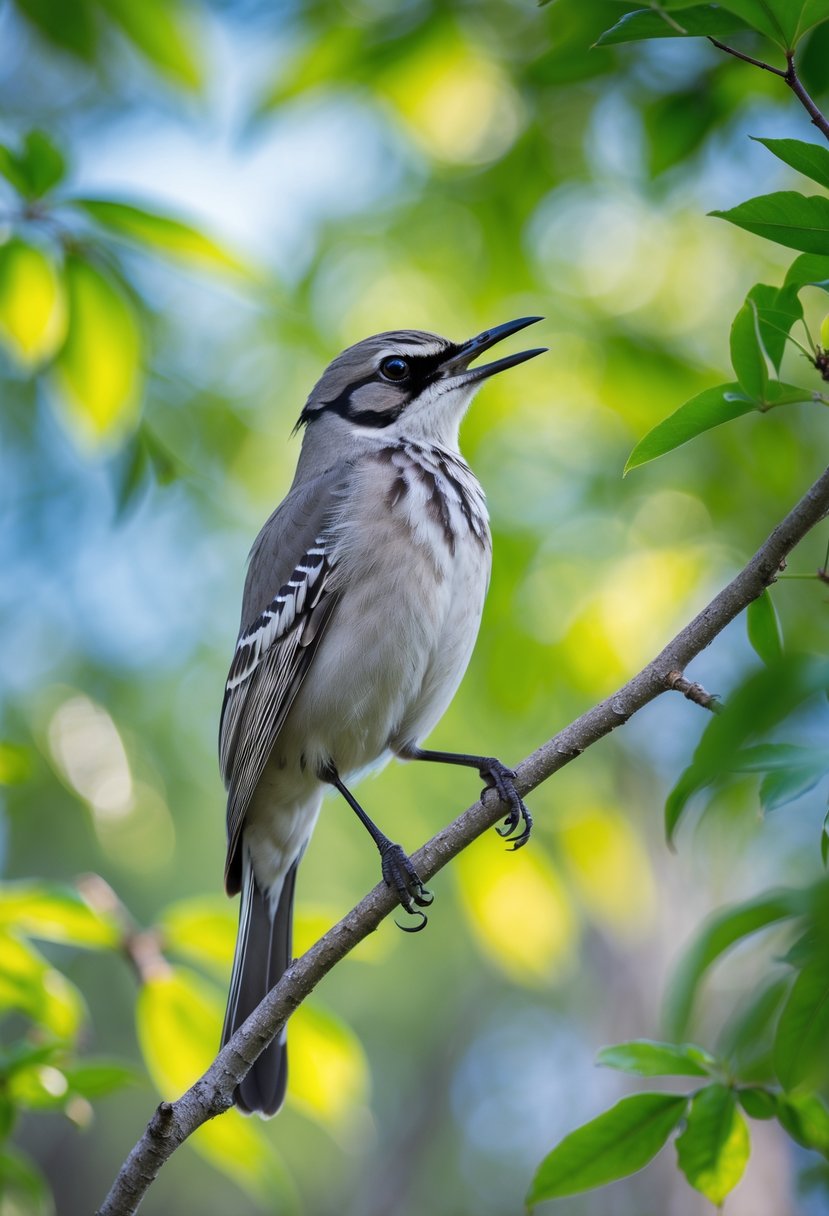
The Northern Mockingbird stands out as one of America’s most talented singers. These gray birds can copy the songs of over 30 different bird species.
Mockingbirds sing almost constantly during nesting season. They often perform their concerts at night when other birds stay quiet.
Their songs include endless strings of different melodies and sounds. Some can even mimic mechanical noises they hear in their environment.
These birds live across North America in many habitats. They thrive in suburban areas, cities, and rural fields throughout their range.
2) Wood Thrush
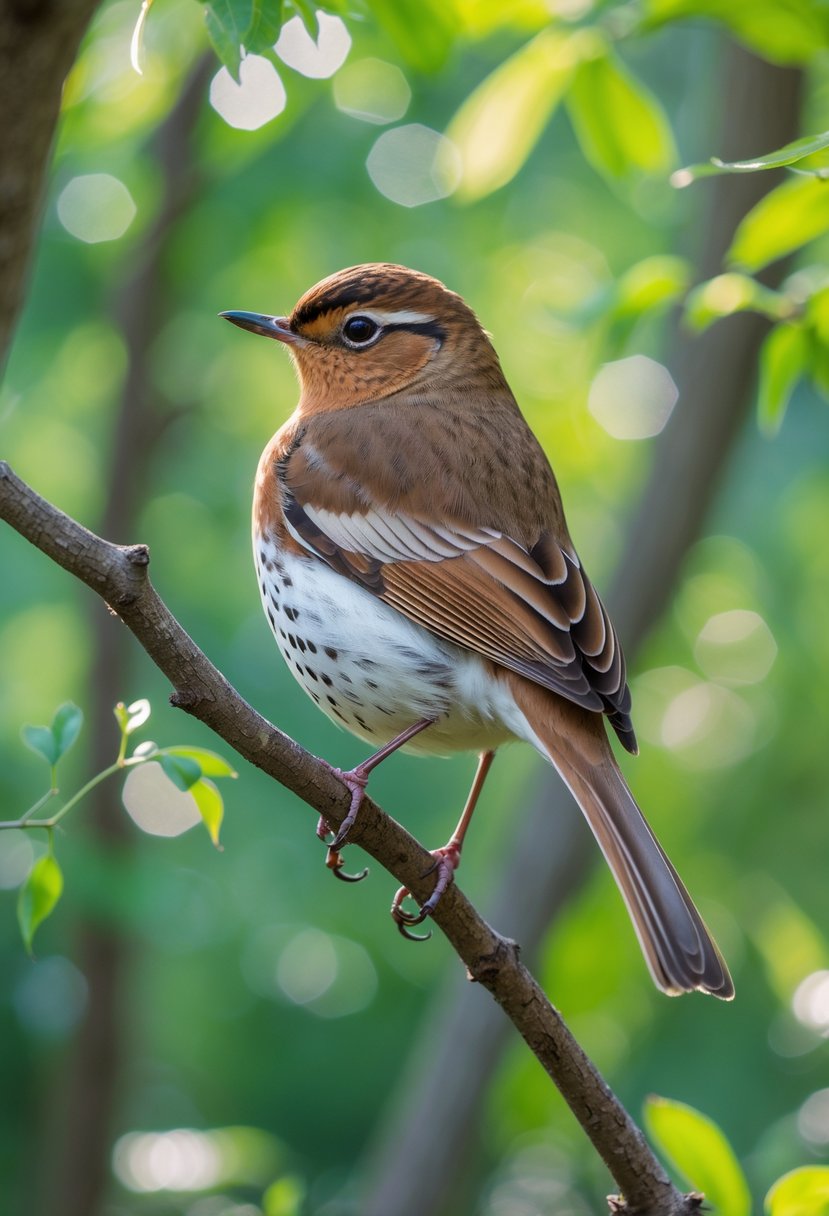
The Wood Thrush ranks among America’s finest songbirds. Its flute-like song echoes through eastern forests each spring and summer.
This medium-sized bird lives in thick deciduous forests from Canada to the Gulf Coast. It has cinnamon brown feathers on top and a white breast with bold spots.
The Wood Thrush belongs to the same family as the American Robin. Many consider it the premier American songbird for its rich, melodious voice.
3) Hermit Thrush
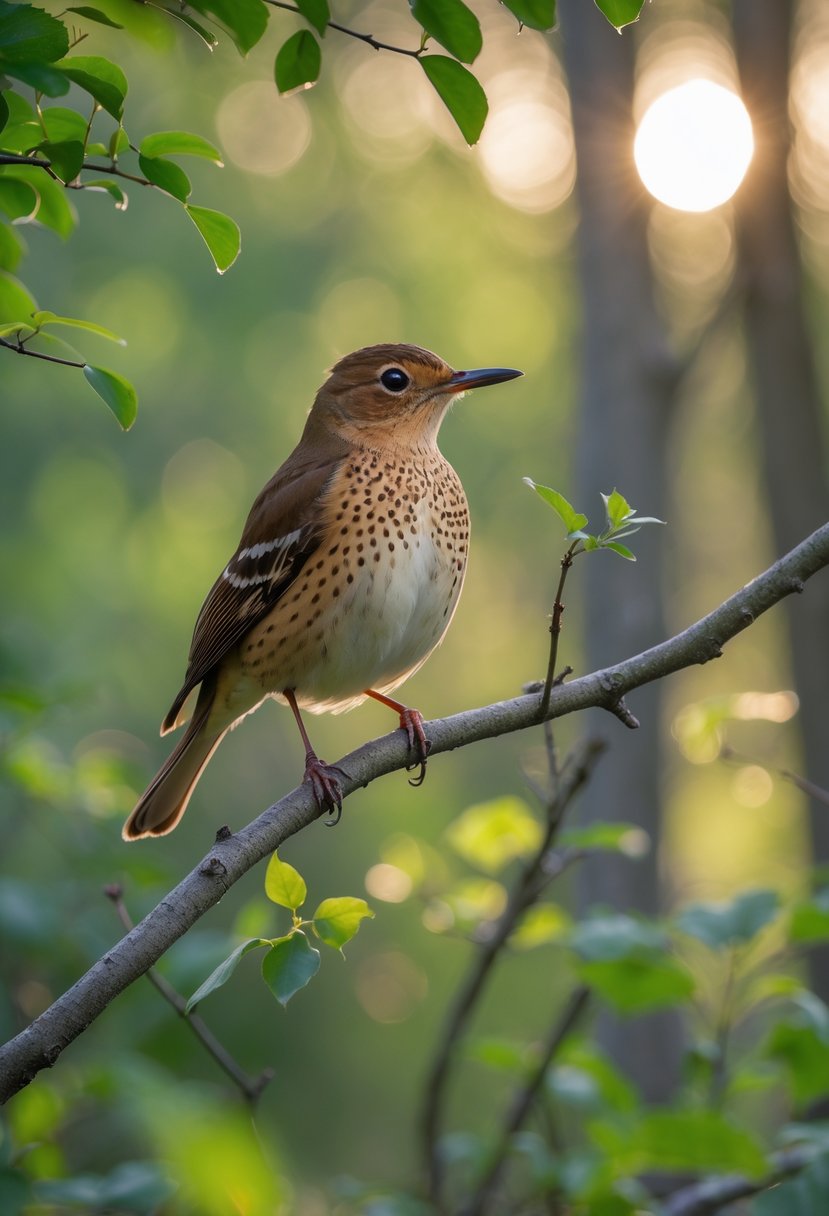
The Hermit Thrush stands out as one of North America’s finest songbirds. This small brown bird creates flute-like songs that echo through northern forests.
Scientists know this bird as Catharus guttatus. It has rich brown feathers on top and spotted markings on its chest.
The Hermit Thrush lives in wooded areas across North America. It spends summers in northern forests and winters in southern regions.
This shy bird searches for food on the forest floor. It finds insects by looking through fallen leaves.
4) American Robin
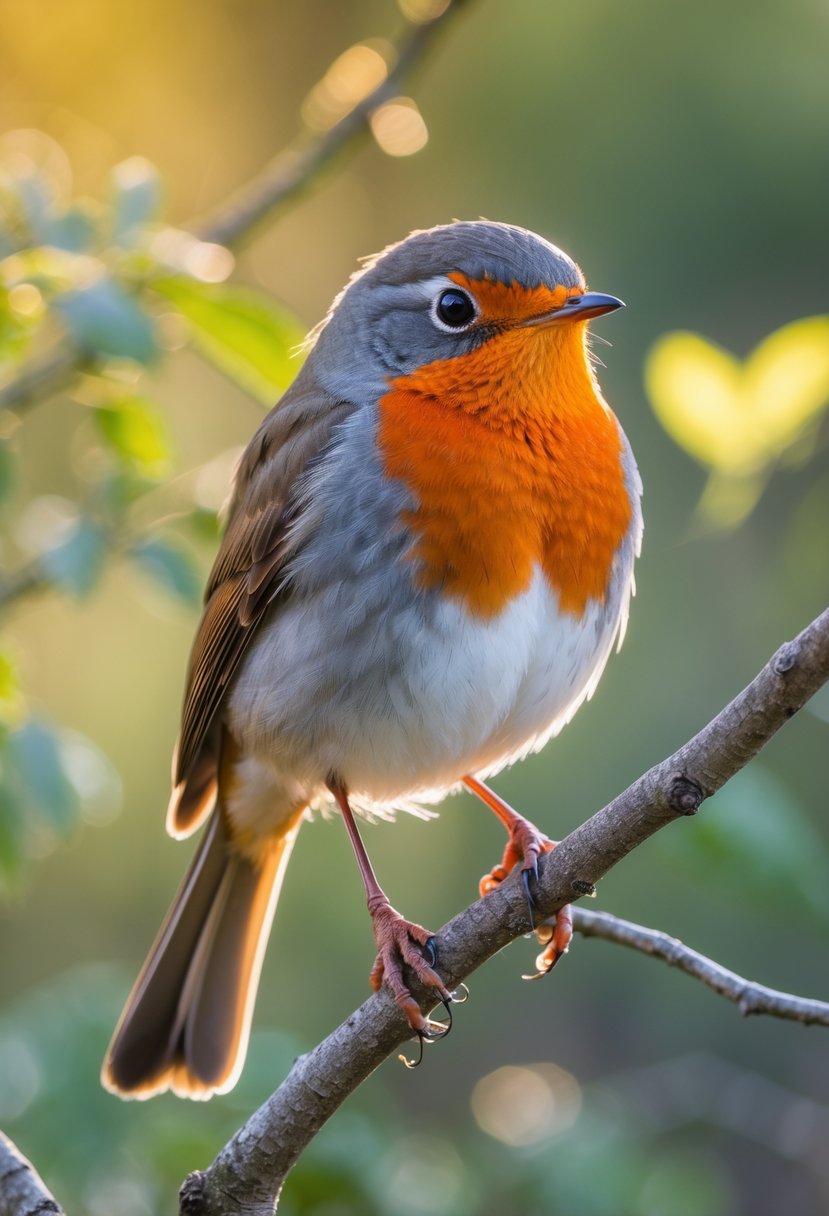
The American Robin ranks among North America’s most familiar songbirds. Its bright orange-red breast makes it easy to spot in backyards and parks.
This bird produces a cheerful, melodic song that signals spring’s arrival. Robins sing from dawn through evening hours.
American Robins live across the continent from Alaska to Mexico. They adapt well to cities, suburbs, and wild forests.
These birds hunt earthworms on lawns by listening and watching carefully. They also eat berries and insects throughout the year.
5) Carolina Wren
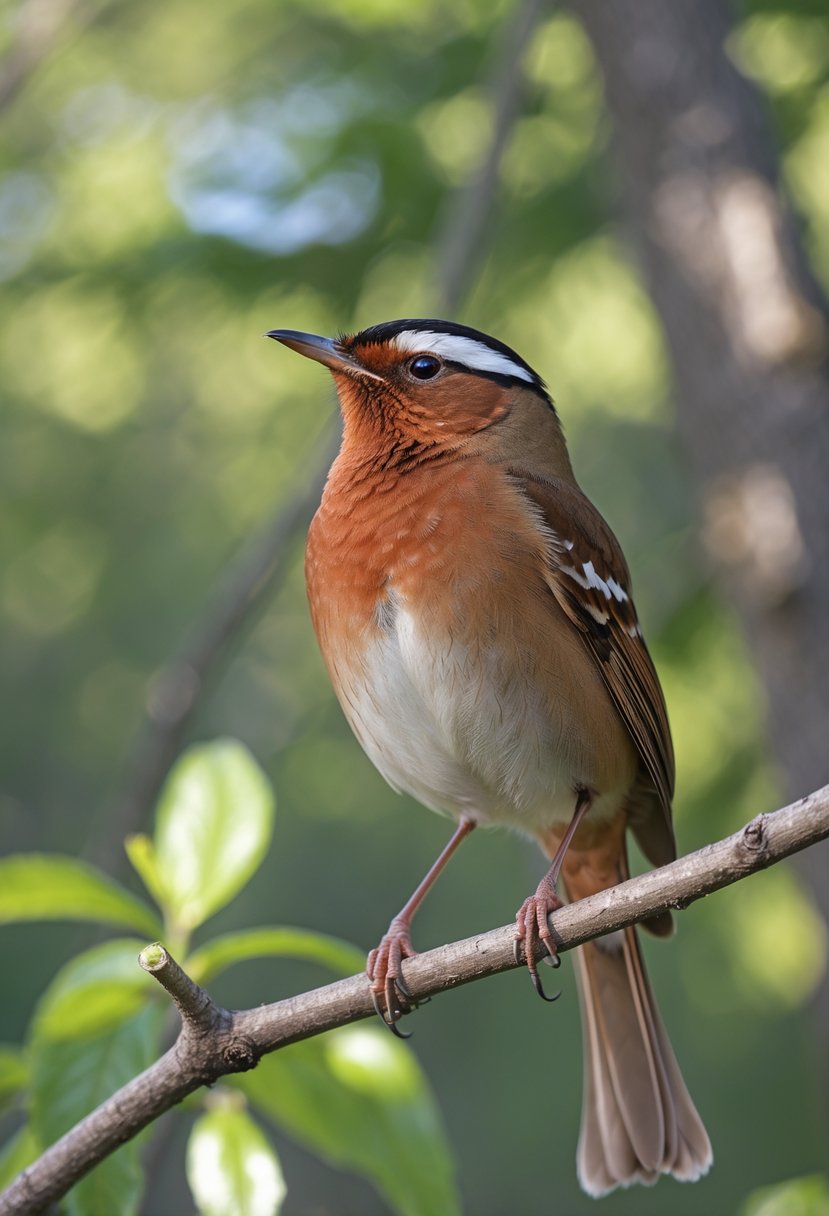
The Carolina Wren stands out as the largest wren species in eastern North America. This small songbird lives throughout the eastern and south-central United States.
Carolina Wrens produce loud, melodious songs that fill their territories. Their famous “teakettle” call makes them easy to identify in backyards and wooded areas.
These birds adapt well to human environments. They explore yards, garages, and woodpiles while searching for insects and fruit along tree trunks and dense vegetation.
6) Eastern Bluebird
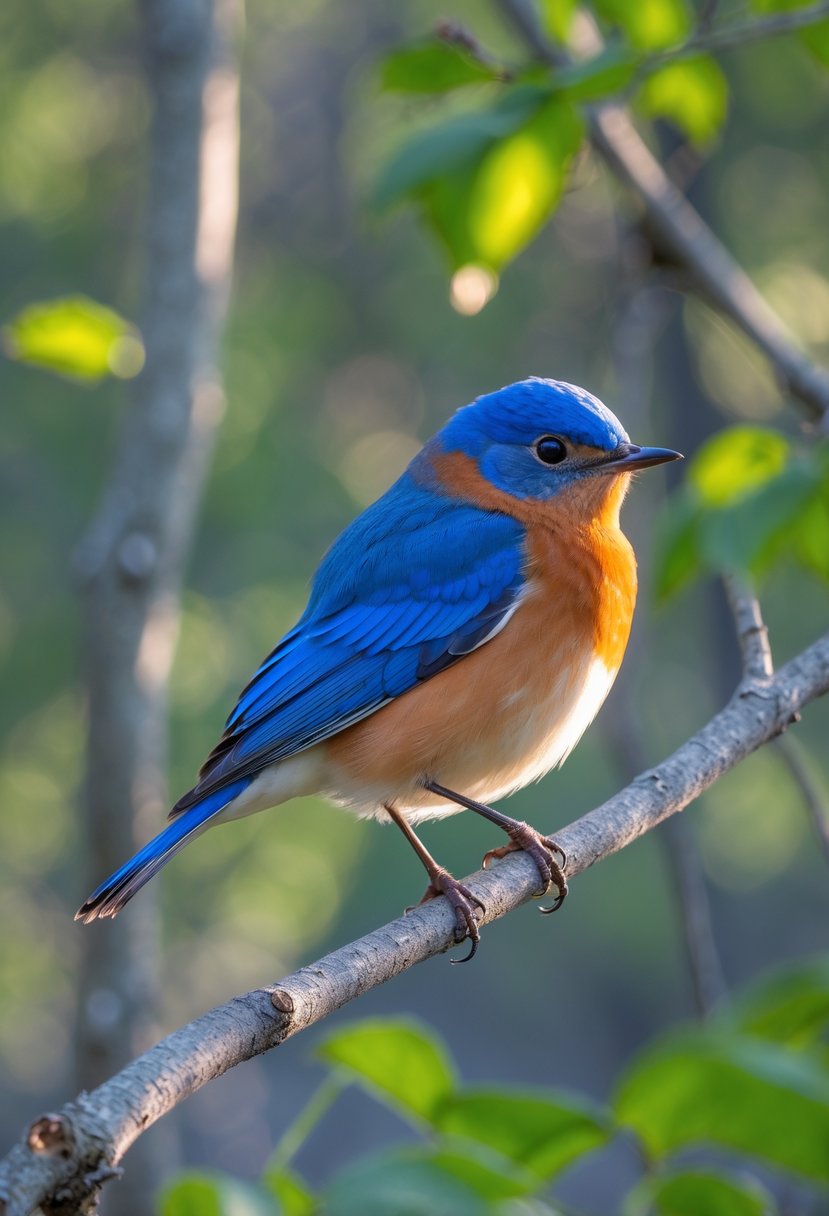
The Eastern Bluebird stands out with its bright blue back and warm red chest. This small songbird produces gentle, warbling songs that create peaceful sounds in open spaces.
These birds live east of the Rocky Mountains. They prefer farmlands, orchards, and areas with scattered trees.
Eastern Bluebirds eat insects like crickets and grasshoppers. They also enjoy berries and fruits when available.
Many Eastern Bluebirds migrate south for winter. Others stay near their nesting areas if food and weather allow.
7) Veery
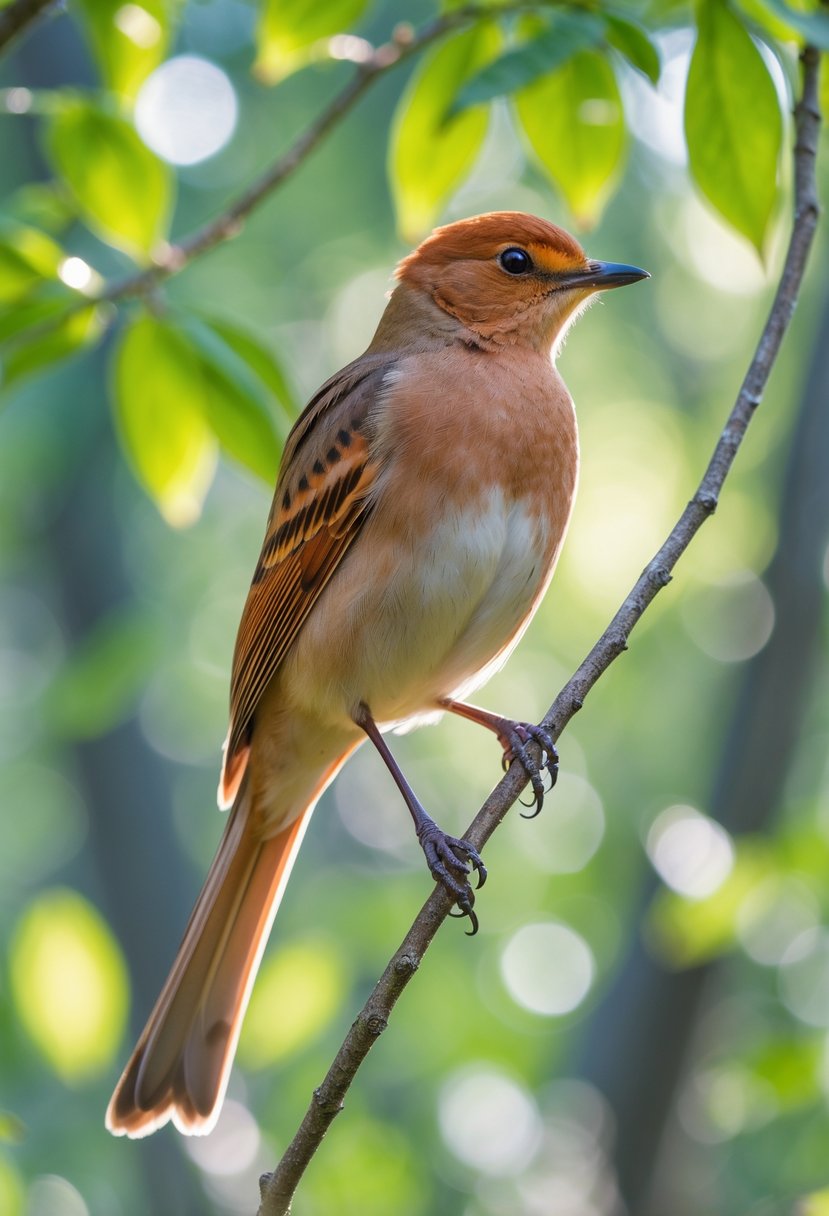
The Veery is a medium-sized thrush found across North America’s forests. This bird has warm brown plumage on its back and wings with lighter, spotted underparts.
Veeries produce one of the most haunting songs in American woodlands. Their call creates a downward spiral of flute-like notes that echo through dense forests.
These birds prefer thick, moist woodlands near streams or swamps. They spend much of their time on the forest floor searching for insects and berries.
8) House Finch
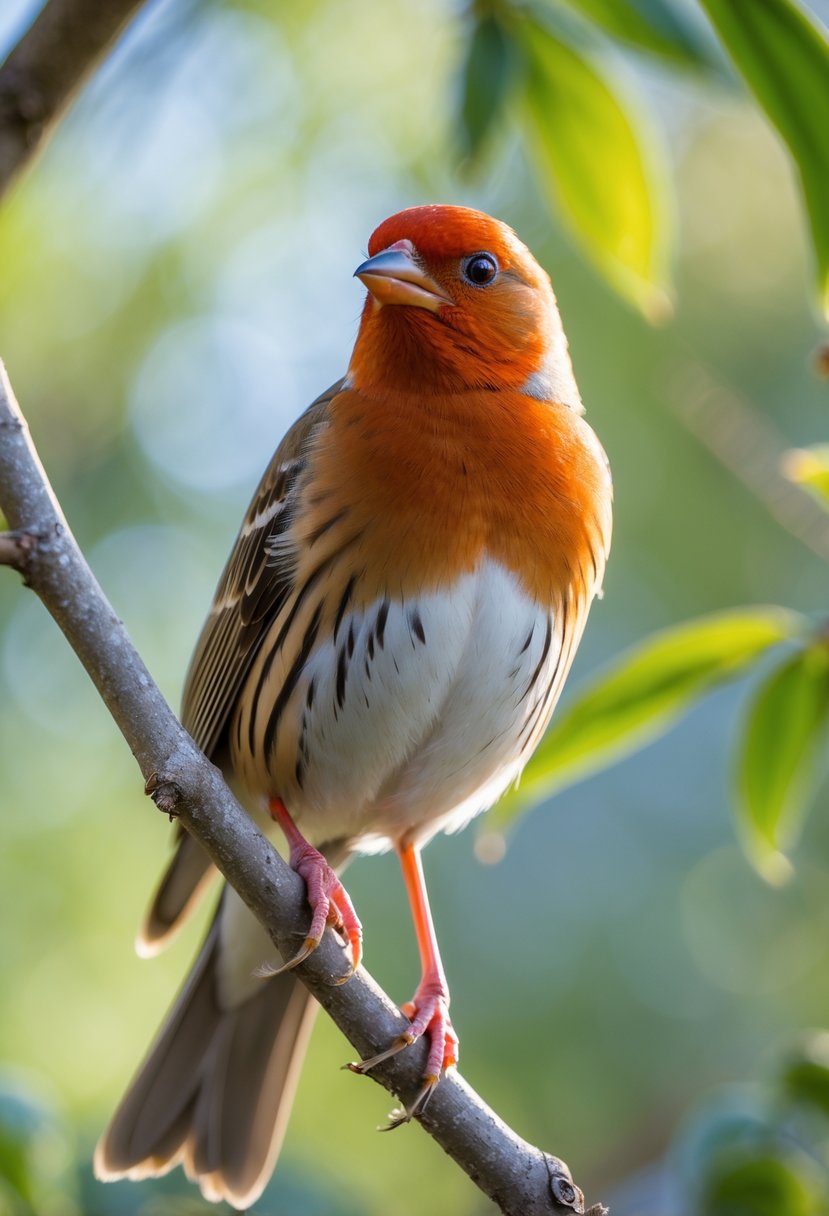
The House Finch brings cheerful songs to backyards across America. These small birds are known for their friendly nature and beautiful melodies.
Male House Finches display bright red coloring on their heads and chests. Their diet affects how vibrant their red feathers appear.
These adaptable songbirds visit feeders regularly and gather in flocks. They live comfortably in cities and suburbs throughout most of North America.
House Finches originally came from the Southwest but now thrive from coast to coast.
9) Thrush
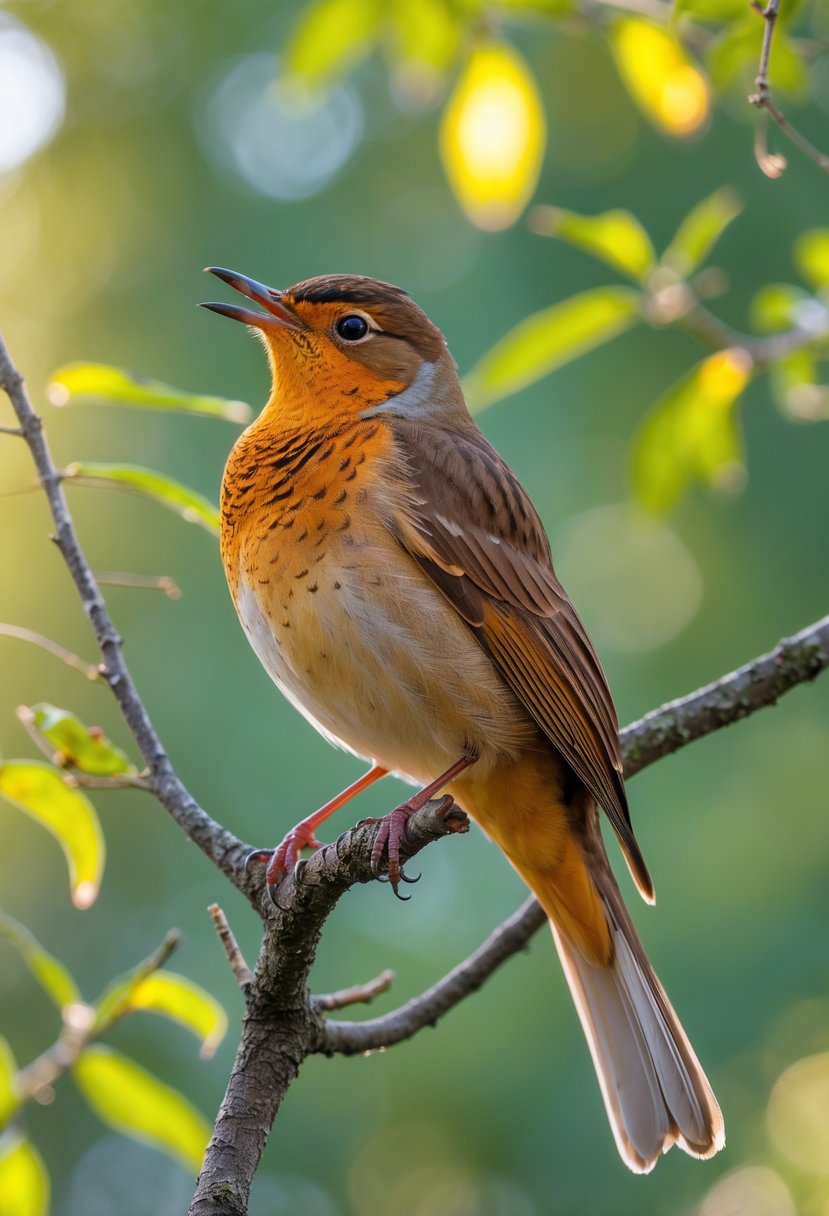
Thrushes are among America’s most skilled songbirds. They create rich, fluting melodies that echo through forests and parks.
The Wood Thrush stands out with complex songs. It can produce harmonies that few other birds can match.
These shy birds often stay hidden in undergrowth. People hear their beautiful songs more often than they see the birds themselves.
Thrushes live in many places across America. They make homes in dense forests, mountain areas, and city gardens.
10) Baltimore Oriole
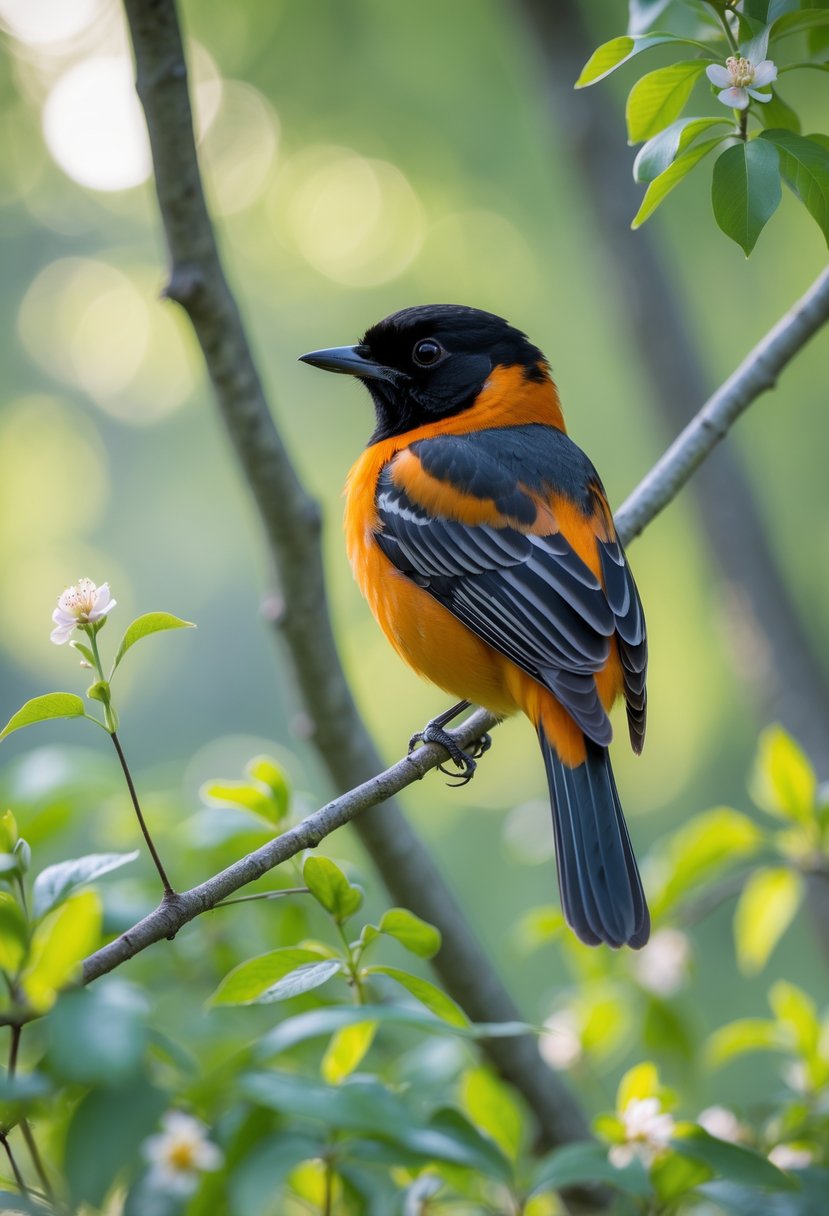
The Baltimore Oriole stands out as one of eastern North America’s most colorful songbirds. Males display bright orange plumage with bold black markings that catch the eye from treetops.
These birds produce rich, whistling songs that signal spring’s arrival. They inhabit parks, gardens, and forest edges across the eastern United States during breeding season.
Baltimore Orioles feed on fruit, nectar, and insects. Females weave hanging nests from thin fibers, creating remarkable suspended homes in tree branches.
11) Purple Martin
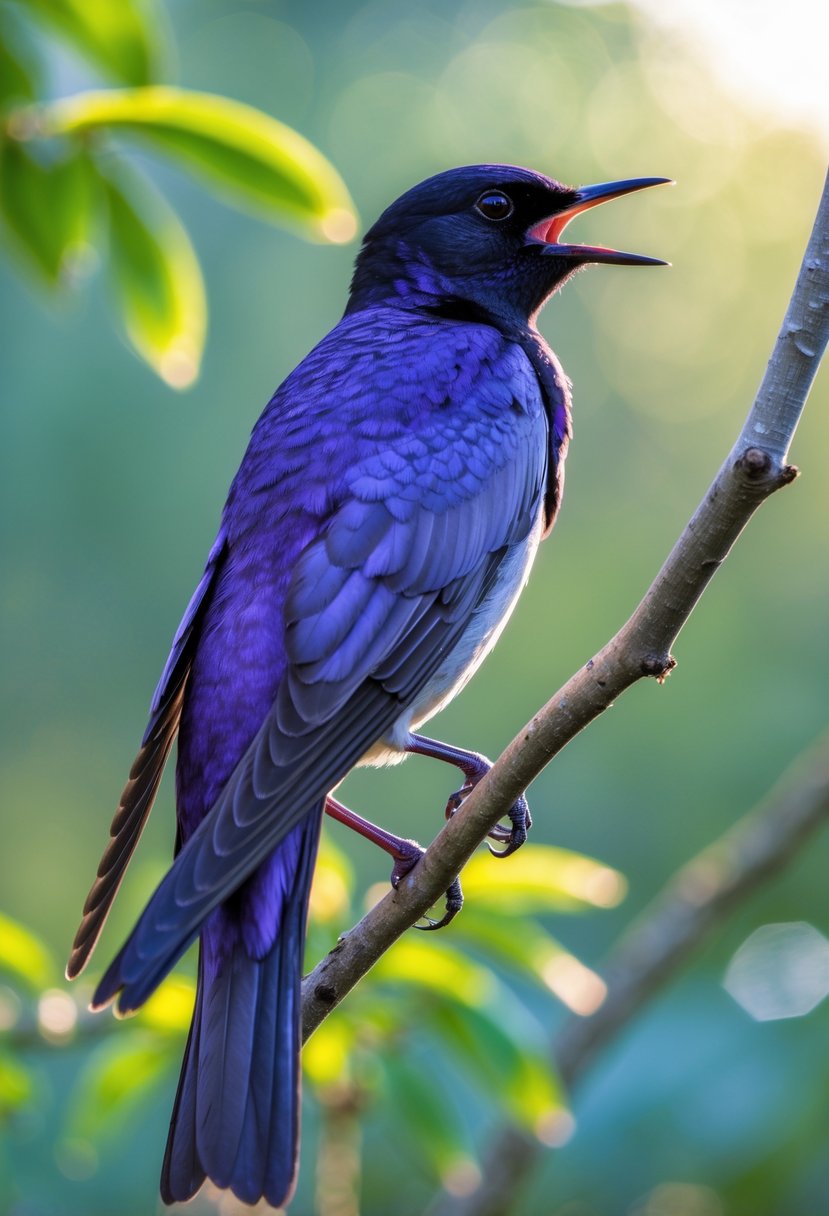
The Purple Martin stands as North America’s largest swallow. These skilled flyers reach speeds up to 40 miles per hour while catching insects in mid-air.
Male Purple Martins display dark, glossy-blue feathers with an iridescent sheen. Females show brown and gray coloring with lighter bellies.
In eastern regions, Purple Martins nest in special birdhouses that people put up for them. Western Purple Martins prefer natural woodpecker holes in dead trees.
These songbirds migrate to South America each winter before returning to breed in North American summers.
12) Black-Capped Chickadee
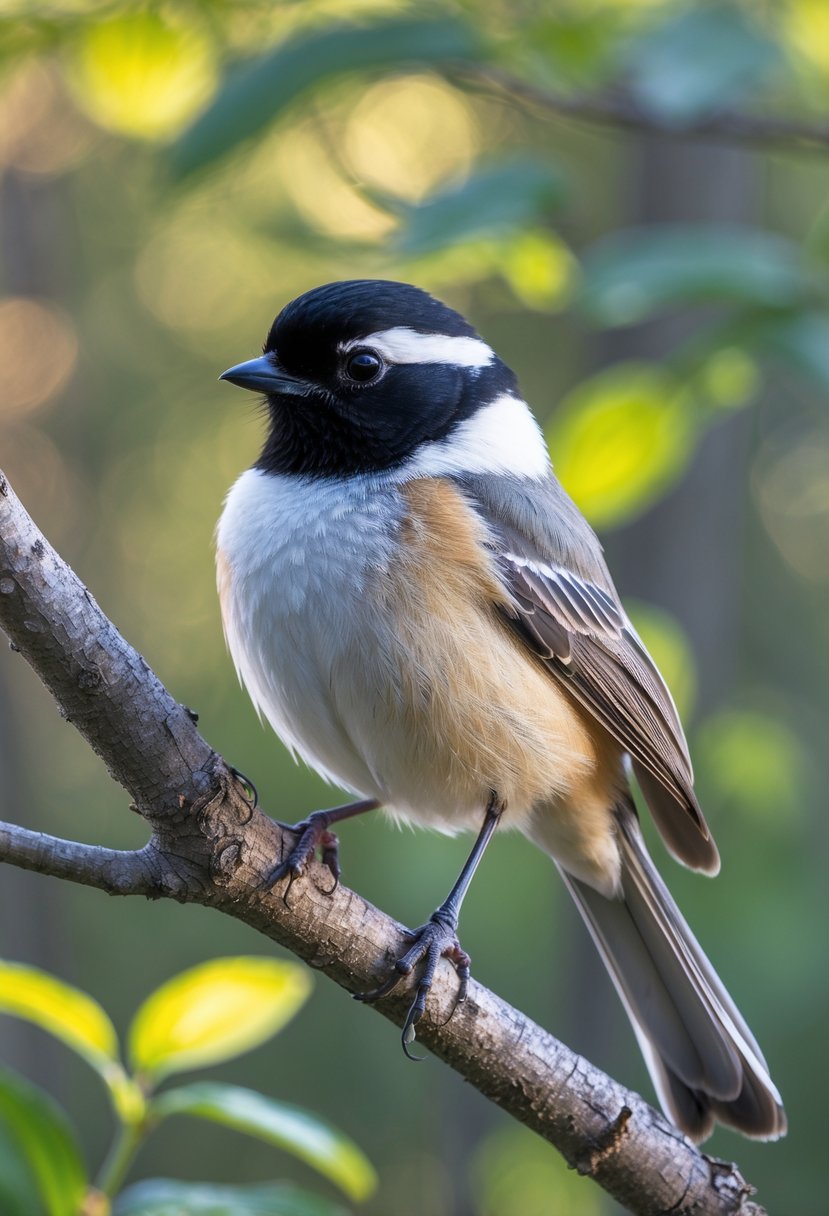
The Black-capped Chickadee ranks among America’s most recognizable songbirds. This tiny bird features a black cap and bib with bright white cheeks.
These birds stay active year-round across northern North America. They don’t migrate during winter months.
Black-capped Chickadees visit backyard feeders regularly. They prefer sunflower seeds, peanuts, and suet.
Their bold and curious nature makes them popular with birdwatchers. They often investigate new objects in their territory without fear.
13) Sparrow
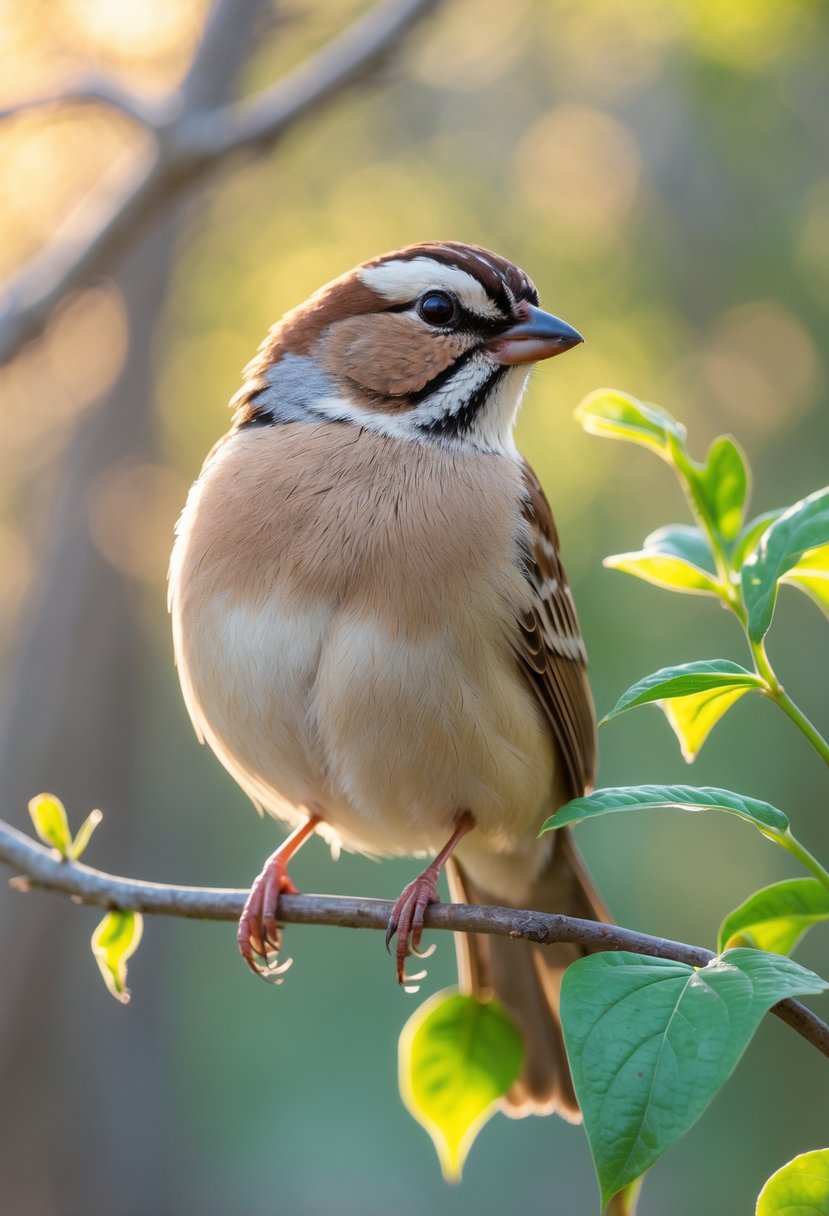
Sparrows are small songbirds that measure 4-7 inches long. They have streaky brown or gray feathers that help them blend into their surroundings.
The Song Sparrow stands out as one of America’s most recognizable sparrow species. It has a russet-and-gray body with bold streaks down its white chest.
Song Sparrows live in wet, shrubby, and open areas across the United States. They often perch on low shrubs and sing their sweet melodies.
These birds are seed-eaters with cone-shaped bills. Their songs mix tinkling notes and musical trills that add beauty to America’s natural symphony.
14) Northern Cardinal
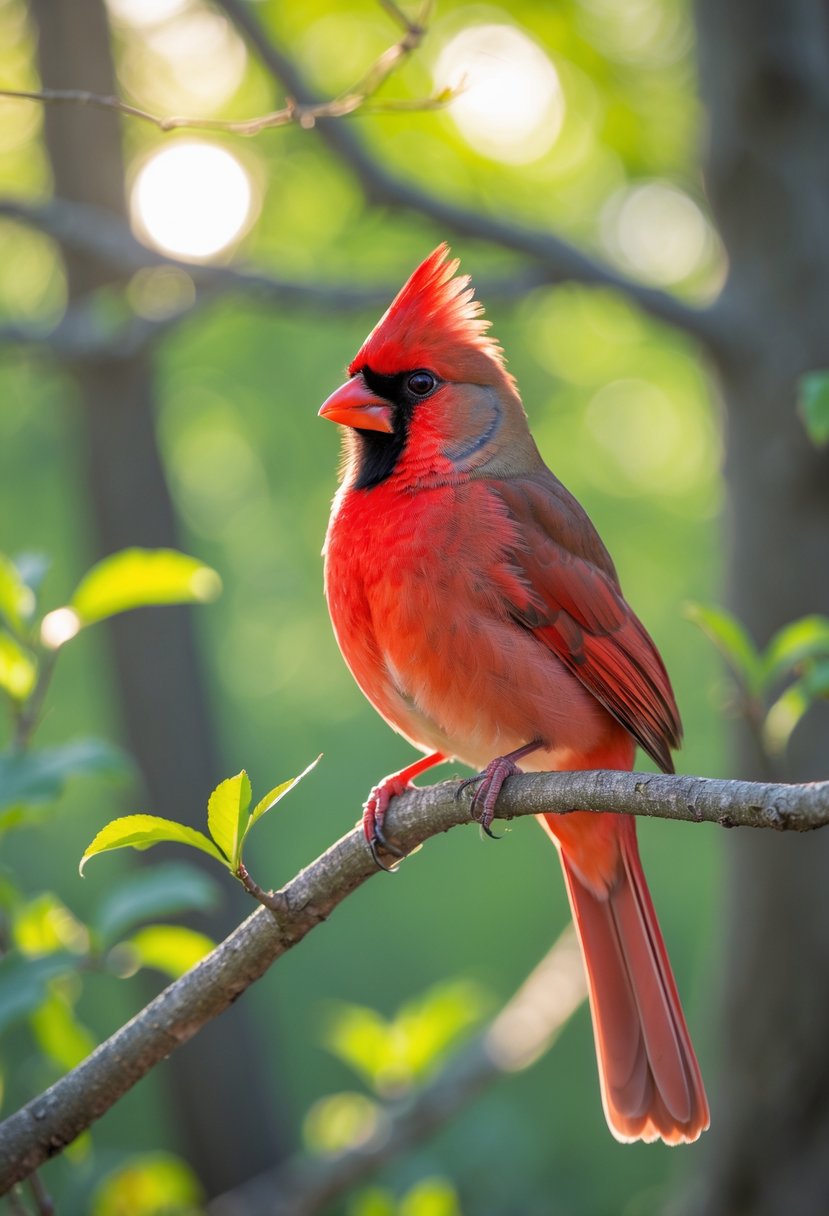
The Northern Cardinal ranks as one of America’s most beloved songbirds. Males display brilliant red feathers while females show warm brown tones with red highlights.
These birds live year-round across the eastern and central United States. They make their homes in backyards, parks, and forest edges.
Cardinals sing clear, whistled songs that sound like “cheer-cheer-cheer” or “purty-purty-purty.” Both males and females can sing, which is rare among songbirds.
Seven states chose the Northern Cardinal as their official state bird.
15) Grosbeak
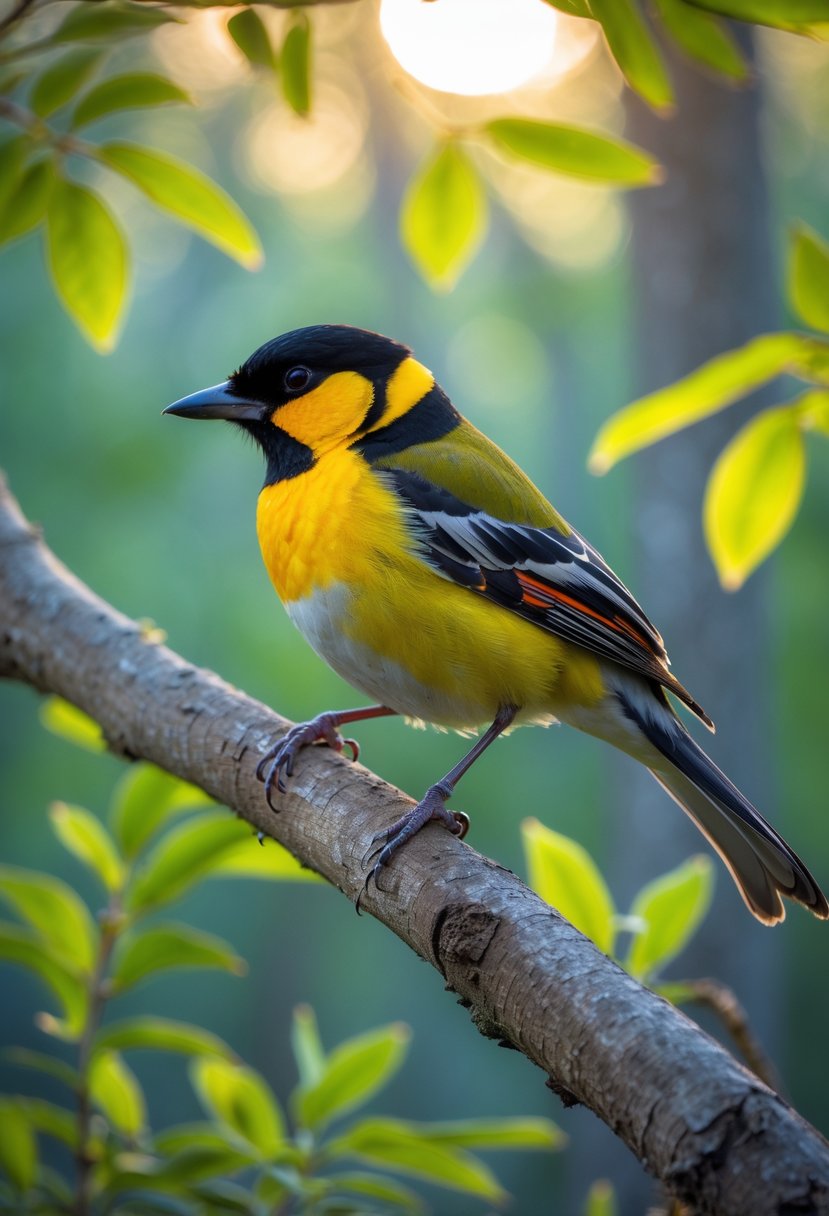
Grosbeaks are medium-sized songbirds known for their large, powerful beaks. The name “grosbeak” means “large beak” in French.
These birds belong to three different families: finches, cardinals, and weavers. Seven species live in North America.
Grosbeaks have colorful plumage and strong bills perfect for cracking seeds and nuts. Males typically display brighter colors than females.
They inhabit forests across North America, from coniferous woods to residential areas. Evening Grosbeaks often travel in flocks during winter months.
These birds play important roles in their ecosystems through seed dispersal and pest control.
16) Kirtland’s Warbler
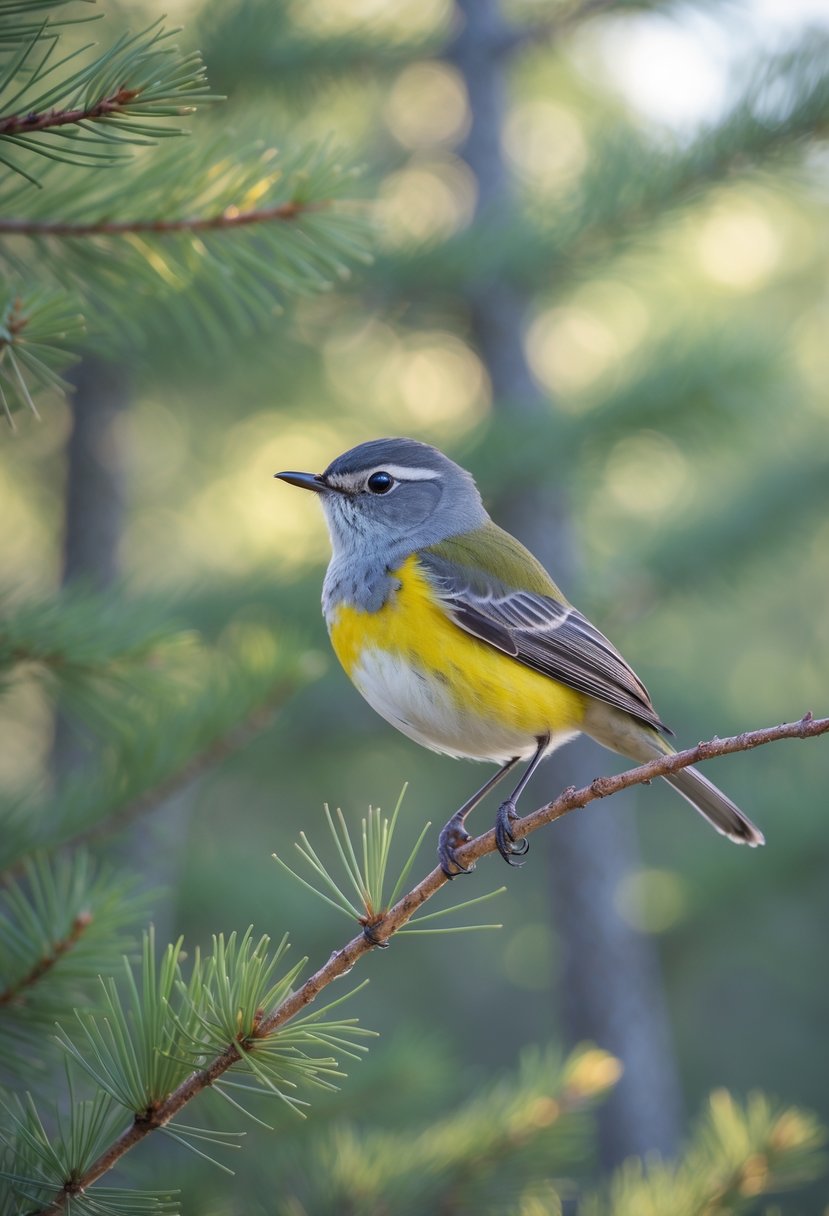
The Kirtland’s Warbler is one of North America’s rarest songbirds. This small gray and yellow bird breeds almost only in Michigan’s young jack pine forests.
The species nearly went extinct decades ago. Conservation efforts have helped the population recover from dangerously low numbers.
These warblers are habitat specialists. They need specific young jack pine stands that grow after forest fires.
Kirtland’s Warblers migrate about 3,400 miles each year. They travel from Michigan to the Bahamas and back.
The species was once heavily threatened by Brown-headed Cowbirds that laid eggs in their nests.
17) Tanager
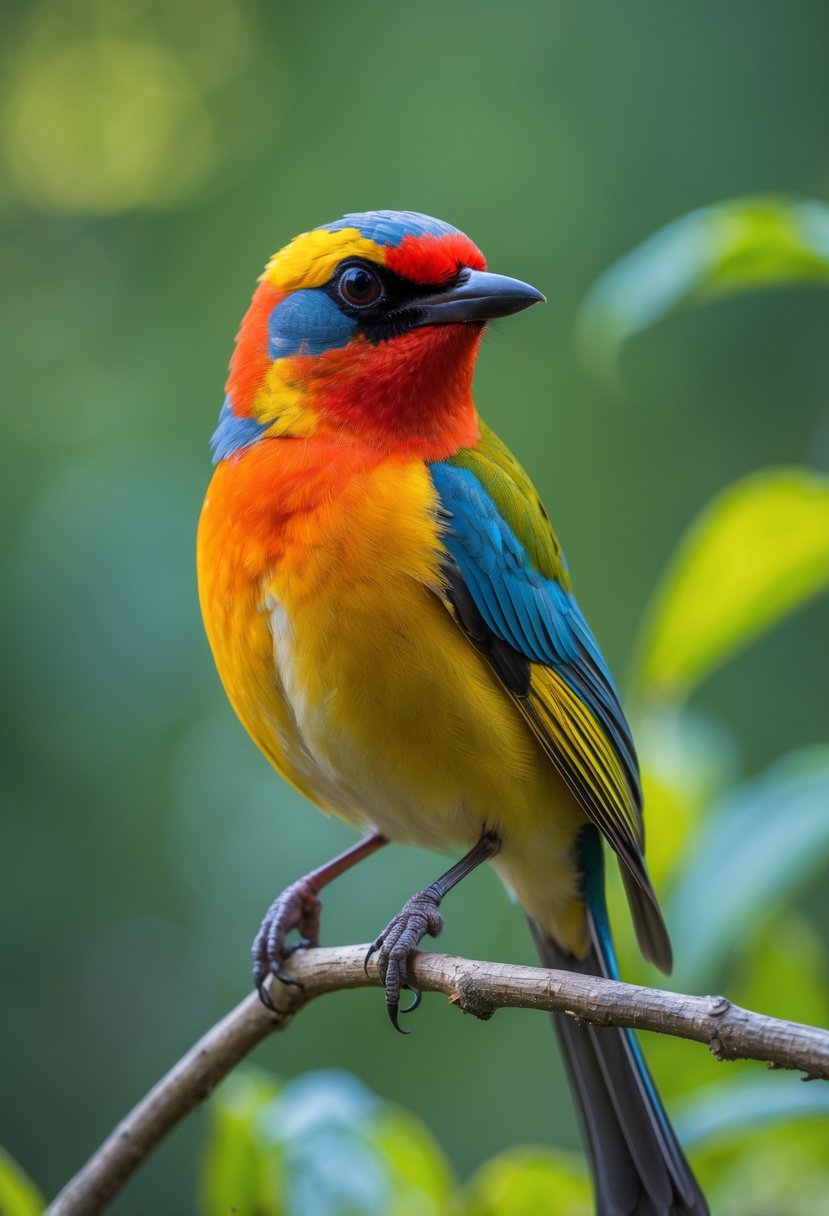
Tanagers bring bright colors to North American forests. These songbirds display red, yellow, and orange feathers that catch the eye.
Four main tanager species live in the United States. The Summer Tanager stands out as the only completely red bird in North America.
Male tanagers show more vivid colors than females. They sing rich, melodic songs from treetops during spring and summer.
Most tanagers visit only during warm months. They migrate south to Central and South America for winter.
18) Common Nightingale
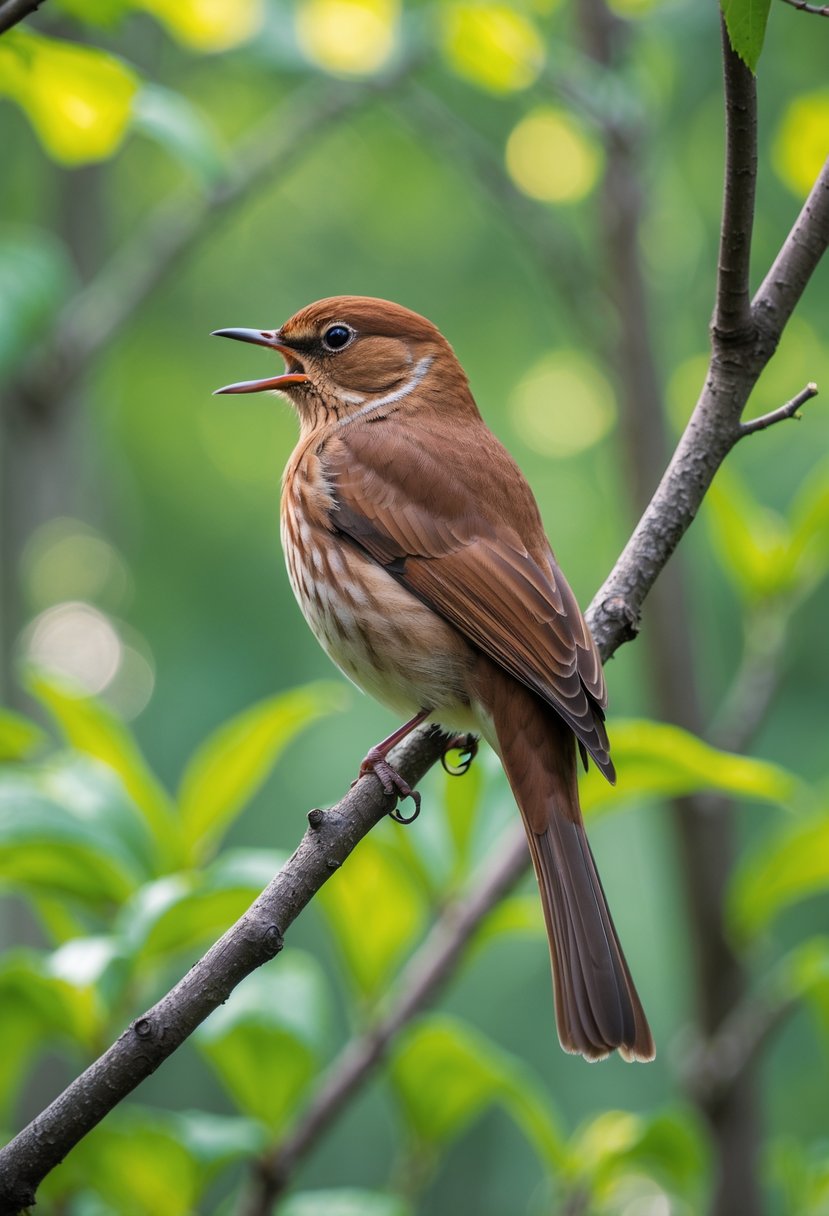
The Common Nightingale is a small bird known for its powerful and beautiful song. This species belongs to the thrush family and creates some of nature’s most impressive vocal displays.
Common Nightingales are found in parts of Europe and migrate to Africa during winter months. They prefer dense woodlands and thick bushes where they can hide while singing.
These birds are not typically found across most of America. However, they remain one of the world’s most famous songbirds due to their rich, varied melodies that often continue through the night.