The Midnight Caller: The Asian Koel
At the break of dawn in South Asia, when the world is still wrapped in mist, a long, haunting koo-ooo… koo-ooo… floats across the trees. The sound is unmistakable—mysterious, resonant, and strangely beautiful. Hidden in the dense canopy, the Asian Koel (Eudynamys scolopaceus) announces its presence not with color or spectacle, but with a voice that has echoed in folklore and human memory for centuries.
A Study in Contrast
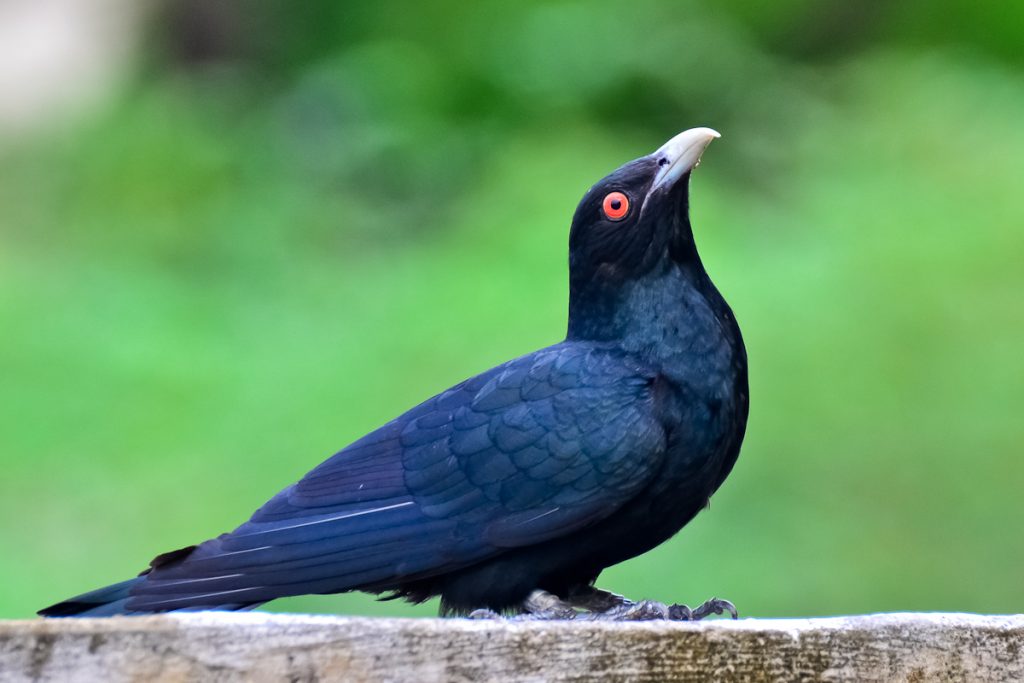
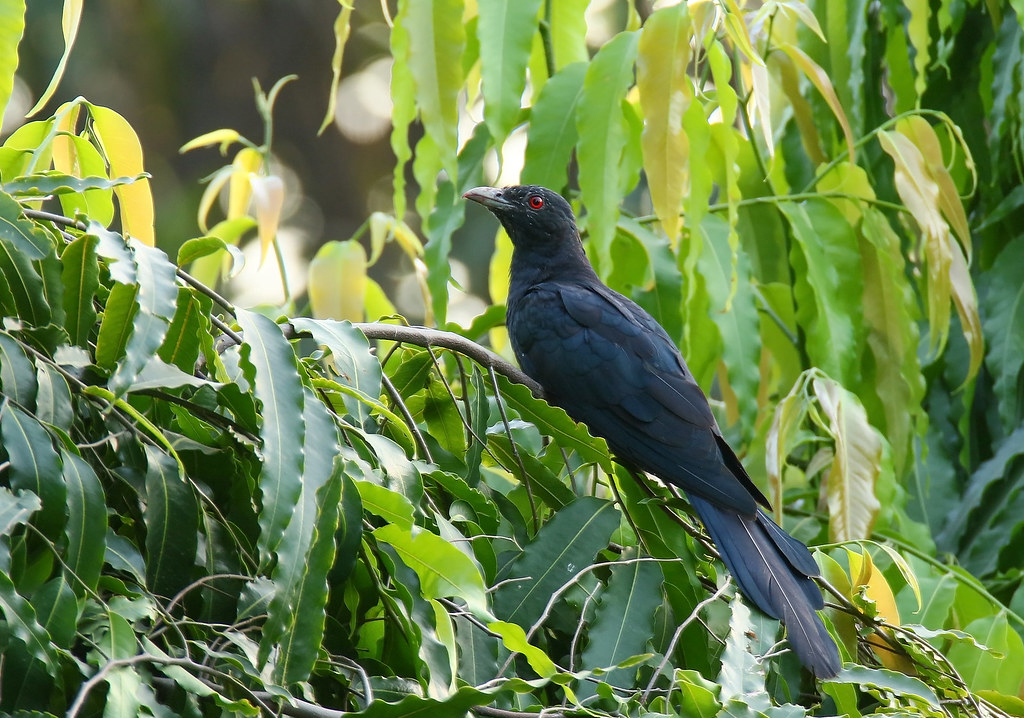
The Asian Koel is not a flamboyant bird at first glance, but closer observation reveals a quiet elegance. Males are cloaked in glossy black plumage that gleams blue-green under sunlight, with crimson eyes burning like embers. Females, in contrast, are patterned with brown streaks and white spots, their barred tails blending seamlessly into the branches. This stark difference between the sexes makes the species a striking example of sexual dimorphism.
Life in the Canopy
Ranging widely from India to Southeast Asia and northern Australia, the Asian Koel thrives in woodlands, groves, orchards, and even urban gardens. Its diet is rich in fruit—figs, berries, and mangoes—making it an important seed disperser in tropical ecosystems. While it will occasionally eat insects and eggs, it is best known as a fruit-loving wanderer, often glimpsed hopping among branches in search of ripe bounty.
The Art of Deception
What sets the Asian Koel apart is its unusual breeding strategy. As a brood parasite, it does not build its own nest. Instead, the female lays her eggs in the nests of other birds—often crows, mynas, or drongos—leaving them to raise her young. The koel chick grows quickly, often outcompeting or displacing the host’s own chicks. While this may seem ruthless, it is a remarkable survival strategy that has allowed the species to flourish across its vast range.
Voice of the Monsoon
If the male’s koo-ooo is the hallmark of spring and summer, the female contributes her own repertoire of sharp, cackling calls. In many parts of India, the koel’s song is intimately tied to the arrival of the monsoon rains, celebrated in poetry, music, and folklore. To countless generations, its voice has been both a herald of fertility and a symbol of longing, often woven into love songs and seasonal chants.
Conservation and Coexistence
Classified as Least Concern, the Asian Koel is widespread and adaptable. It has learned to thrive even in human-dominated landscapes, especially where fruit trees grow. Yet like many birds, it remains vulnerable to habitat loss and the decline of host species that support its breeding cycle. Its continued presence depends on healthy ecosystems where both predator and host can coexist.
A Lasting Impression
To hear the Asian Koel at dawn is to connect with an ancient rhythm of nature, one that has pulsed through villages, forests, and cities for centuries. It is not the brilliance of its feathers but the persistence of its song that lingers—melancholic, insistent, unforgettable. The Asian Koel is a reminder that beauty in the wild often comes not only in what we see, but in what we hear, carried on the air like a timeless story.