The Sapphire Giant of the Sky: The Hyacinth Macaw
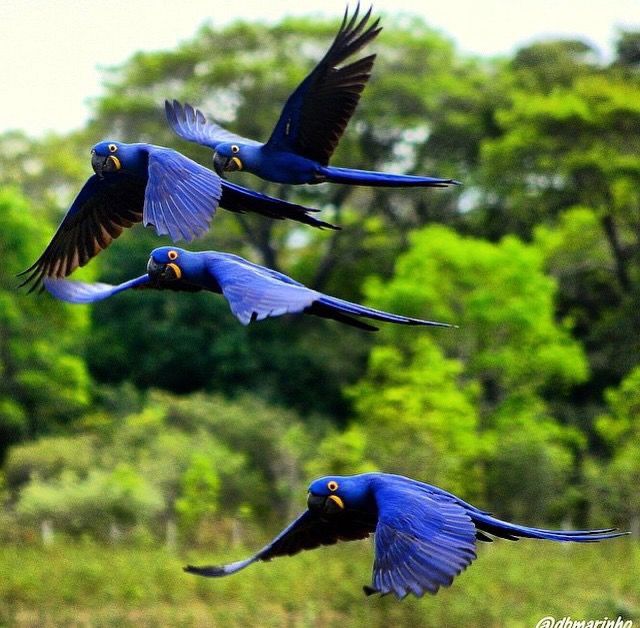
In the wild heart of South America, where the Pantanal wetlands shimmer beneath a blazing sun, a flash of deep cobalt-blue cuts across the open sky. With wings spanning more than a meter, it glides effortlessly before landing on a palm tree, its massive beak ready to crack the toughest nut. This is the Hyacinth Macaw (Anodorhynchus hyacinthinus), the largest and most striking of all parrots.
A Bird Drenched in Blue
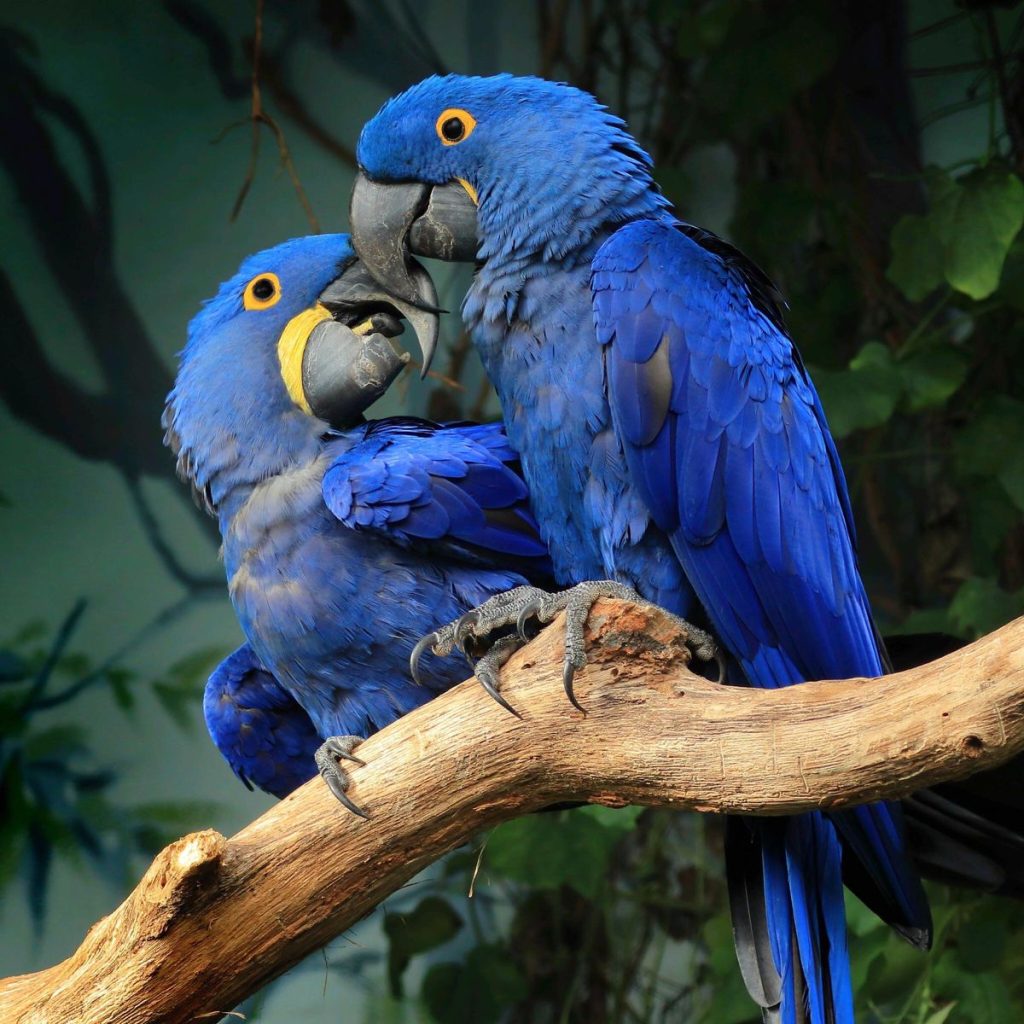
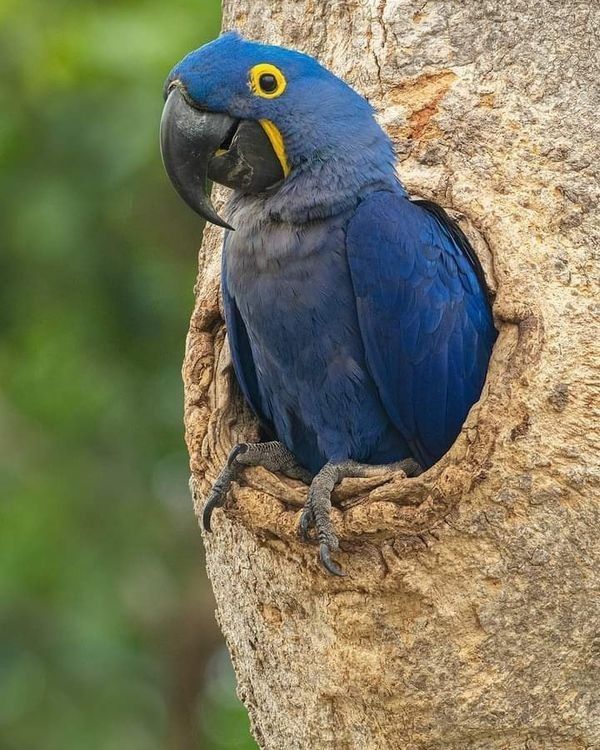
The Hyacinth Macaw is a vision of elegance and power. Its plumage is an unbroken sea of vivid sapphire blue, glowing against the green and gold of the tropical landscape. Around its eyes and at the base of its enormous black beak are bare patches of bright yellow skin, creating a perfect contrast that highlights its expressive face. Measuring up to one meter in length, it dwarfs most other parrots, earning its title as the “gentle giant” of the macaw family.
Strength in the Beak
This species is famous for its extraordinary beak—strong enough to crack the shells of coconuts and Brazil nuts, which few animals can manage. Their primary food sources include the nuts of palm trees, as well as fruits and berries. Watching a Hyacinth Macaw effortlessly snap open a nut that would break human tools is a reminder of its unmatched adaptation.
Family Bonds in the Canopy
Like many parrots, Hyacinth Macaws are highly social and deeply bonded. They often form lifelong pairs, seen flying together or grooming each other’s feathers. Their nests are made in tree cavities or sometimes cliff faces, where the female lays one to two eggs. Both parents share the duty of raising chicks, and even outside breeding season, these macaws gather in noisy flocks, their calls echoing like trumpets over the savanna and forest.
Where They Live
Hyacinth Macaws are found mainly in Brazil’s Pantanal, the Cerrado savannas, and parts of Bolivia and Paraguay. They depend heavily on palm species, especially the acuri and bocaiuva palms, making them closely tied to the health of these ecosystems. Their bright colors and playful behavior make them popular attractions, but also targets for poaching.
Beauty Under Threat
Once heavily hunted for the pet trade and their striking feathers, Hyacinth Macaws suffered severe declines in the 20th century. Though now protected, they remain Vulnerable on the IUCN Red List, with habitat destruction and illegal trade continuing to threaten populations. Conservation efforts—including nest-box programs and eco-tourism projects in the Pantanal—have helped numbers slowly recover, but their survival still depends on preserving palm-rich landscapes.
A Living Jewel
For many, the Hyacinth Macaw is more than a bird—it is a symbol of freedom, beauty, and resilience. Its glowing blue feathers have earned it a place in folklore and art, while its gentle nature has made it beloved by people who share its lands. To see one in flight is to glimpse a living sapphire, shimmering against the wild sky.
A Closing Reflection
The Hyacinth Macaw reminds us that the rarest beauty is also the most fragile. Its survival is tied to forests, wetlands, and the people who choose to protect them. In its brilliant blue wings, we see both the grandeur of nature and the responsibility we carry—to ensure that the largest of all parrots continues to shine across South America’s skies.