The Silent Sentinel of the Night: The Great Horned Owl
As twilight deepens over the forests of the Americas, the air stirs with a low, resonant call: hoo-hoo-hoo… hoo-hoo. The sound is both haunting and powerful, echoing through valleys and woodlands, a voice of the night itself. Then, from a shadowed perch, a pair of glowing yellow eyes emerges, framed by tall feathered tufts like horns. This is the Great Horned Owl (Bubo virginianus), one of the most formidable and widespread raptors of the New World.
A Fearsome Beauty
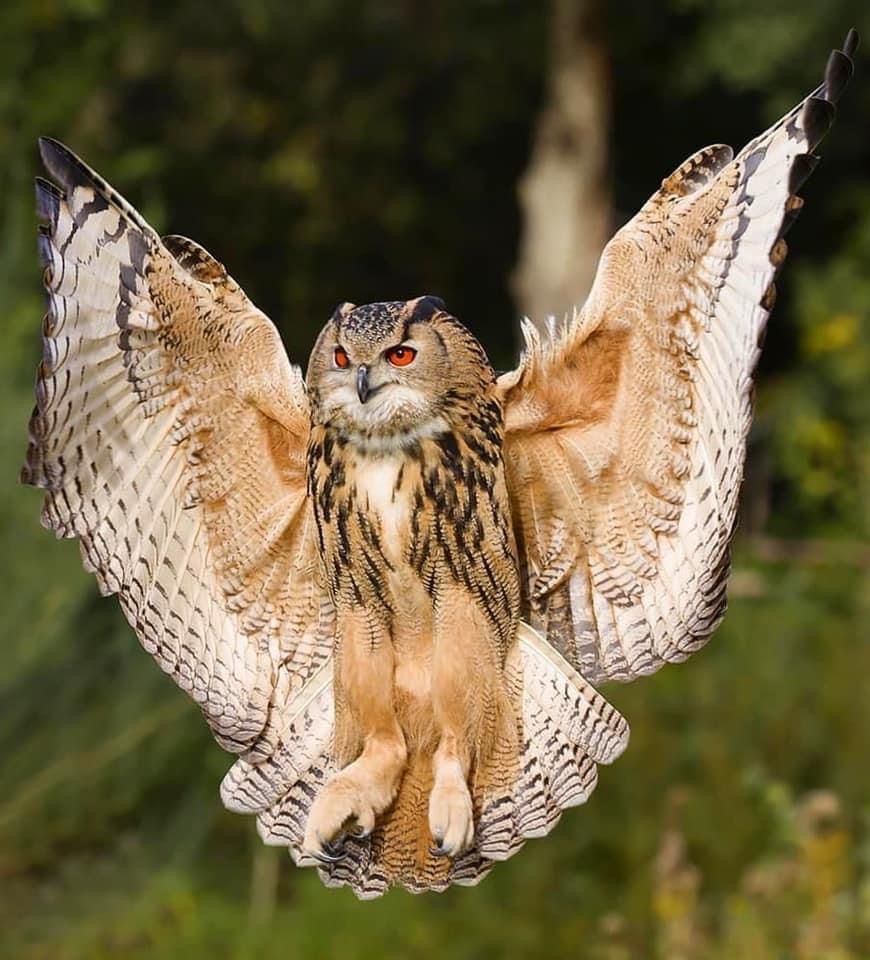
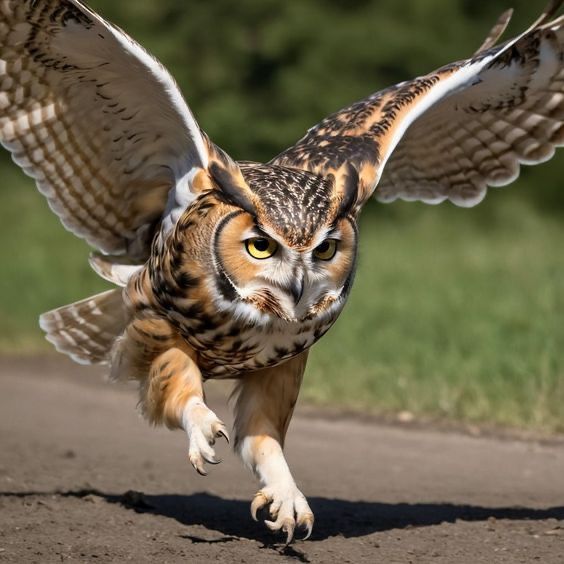
The Great Horned Owl is a bird of imposing presence. Measuring up to 65 centimeters in length with a wingspan of over 1.2 meters, it is powerfully built, cloaked in mottled browns, grays, and creams that blend seamlessly into bark and leaves. Its feather tufts—mistaken for horns or ears—give it a distinctive silhouette, while its fierce yellow eyes and hooked bill complete its image as a master predator. Females are larger than males, an adaptation common among owls and raptors, giving them greater strength when guarding nests.
Master of Many Realms
Unlike many birds tied to narrow habitats, the Great Horned Owl is astonishingly adaptable. Its range stretches from the Arctic treeline of Canada to the southern tip of South America, encompassing deserts, swamps, grasslands, forests, and even city parks. This versatility is matched by its diet: rabbits, skunks, rodents, snakes, other birds—even animals as large as porcupines fall prey to its powerful talons. Silent flight, made possible by specialized wing feathers that muffle sound, allows it to strike with deadly surprise.
Life and Legacy
Courtship begins in the cold of winter, when males and females duet with deep hoots that resonate across the frozen night. Once bonded, pairs remain together for life, often reusing old nests built by hawks, crows, or squirrels. The female lays 2–3 eggs, brooding them with fierce dedication while the male hunts tirelessly. Owlets hatch covered in white down, growing quickly under the constant care and vigilance of their parents. Few predators dare challenge a Great Horned Owl defending its young.
Symbol of Power and Mystery
Throughout the Americas, the Great Horned Owl has long held a place in human imagination. To Indigenous peoples, it was both feared and revered—sometimes a guardian, sometimes an omen. Its call, echoing through the night, has inspired myths of wisdom, death, and transformation. Even today, it remains a symbol of wilderness and resilience, a creature of mystery commanding both respect and awe.
Conservation and Survival
Fortunately, the Great Horned Owl is not endangered. Classified as Least Concern, it continues to thrive thanks to its adaptability. Yet it is not immune to dangers: habitat destruction, vehicle collisions, and secondary poisoning from rodenticides all take their toll. Its continued success depends on healthy ecosystems where prey is plentiful and pesticides are minimized.
A Closing Reflection
To see a Great Horned Owl in the wild is to feel the ancient pulse of the night. Its eyes burn like lanterns in the darkness, its wings carry the silence of the forest, and its call speaks to something primal within us. The Great Horned Owl is not just a hunter—it is the very embodiment of wilderness, a sentinel reminding us that even in a world of noise, silence and mystery endure.